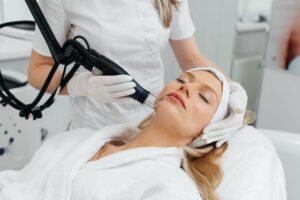
Fractional CO2 laser facials are our most aggressive option for significant sun damage, deep wrinkles, and scarring. The laser creates thousands of microscopic treatment zones that trigger intensive collagen remodeling. You’ll have about a week of downtime with visible peeling, but results are dramatic.
Best for people with significant aging concerns who can handle recovery time.
Erbium laser facials offer precision with less heat damage than CO2 lasers. They work beautifully for fine lines, moderate sun damage, and texture issues. Recovery is faster, usually three to five days.
Best for people who want real results but can’t take a full week off.
Non-ablative fractional laser facials work beneath your skin without removing the surface layer. You’ll have minimal downtime (just redness for a day or two) but need multiple treatments for optimal results.
Best for people with busy schedules who want gradual improvement without obvious recovery.
IPL photofacials target redness, brown spots, and visible blood vessels. The light energy heats and destroys pigmented cells and damaged blood vessels, which your body gradually eliminates over several weeks.
Best for people dealing with sun damage, rosacea, or uneven tone.
Laser Genesis is a gentle, non-ablative treatment that stimulates collagen production and reduces redness. It feels like a warm massage and requires zero downtime.
Best for people who want subtle improvements with absolutely no recovery period.

South Florida sun is brutal on your skin. Between beach days, outdoor activities near Gulfstream Park, and simply living in year-round sunshine, your skin accumulates damage faster than in most other climates.
Here’s what we see constantly in our Hallandale Beach clients:
Sun damage and age spots. Those brown spots on your face, chest, and hands are accumulated UV damage. Laser facials target the melanin in these spots, breaking it down so your body can eliminate it. Your skin tone becomes more even and youthful-looking.
Redness and visible blood vessels. Florida heat and humidity can trigger or worsen rosacea and broken capillaries. Laser treatments specifically target the hemoglobin in blood vessels, sealing them off and reducing redness permanently.
Fine lines and wrinkles. Laser facials stimulate collagen production deep in your skin. As new collagen forms over several months, fine lines soften and skin becomes firmer. It’s not a replacement for Botox (which relaxes muscles), but it improves skin quality from within.
Enlarged pores. While you can’t permanently shrink pores, laser treatments tighten the skin around them and remove debris, making them look smaller. The collagen boost helps maintain this improvement.
Rough, uneven texture. Sun exposure and aging cause skin to become rough and bumpy. Laser resurfacing removes damaged surface cells and promotes new, healthy skin growth. The result is noticeably smoother skin.
Dull, tired-looking skin. Laser facials remove dead skin cells and damaged tissue while stimulating circulation. Your skin looks brighter and more radiant, not flat and lifeless.
We customize treatment based on your skin concerns, type, and how much downtime you can handle.
We start with a comprehensive skin analysis. Our licensed medical aesthetician examines your skin under specialized lighting to identify concerns like pigmentation, vascular issues, and texture problems. We also assess your Fitzpatrick skin type, which determines which lasers are safe for you.
We’ll discuss your medical history, including:
Then we recommend specific laser treatments based on your skin and concerns. No cookie-cutter protocols. Your treatment plan is designed for you.
Two to four weeks before: Stop using retinoids, glycolic acid, and other active ingredients that might sensitize your skin. We’ll give you a complete list.
One week before: Avoid excessive sun exposure. Don’t tan (real or fake). Tanned or sunburned skin can’t be safely treated.
If you get cold sores: We’ll prescribe antiviral medication to prevent an outbreak triggered by treatment.
Day of treatment: Come with clean skin. No makeup, moisturizer, or sunscreen on treatment areas.
Most laser facials start with topical numbing cream applied 30 to 45 minutes before treatment. This makes the procedure much more comfortable.
You’ll wear protective eyewear during treatment. We’ll position you comfortably, then use the laser handpiece to treat your skin systematically.
What it feels like varies by laser type:
Ablative lasers (CO2, Erbium) feel like heat and snapping sensations. It’s uncomfortable but tolerable with numbing cream. Treatment takes 30 to 60 minutes.
Non-ablative lasers feel like warmth and rubber bands snapping against your skin. Most people find it manageable without numbing. Treatment takes 20 to 40 minutes.
IPL photofacials feel like mild snapping. It’s quick and relatively comfortable. Treatment takes 20 to 30 minutes.
Right after treatment, we apply cooling measures and soothing products to your skin.
Recovery varies significantly by laser type.
Ablative laser facials (CO2, Erbium): Your skin will be red, swollen, and sensitive for several days. You’ll start peeling around day three, with visible skin shedding for five to seven days. Most people take a week off work. Total healing takes about two weeks.
Non-ablative fractional lasers: You’ll have redness and mild swelling for one to three days. No visible peeling, but your skin might feel slightly rough. Most people return to normal activities the next day.
IPL photofacials: You’ll have mild redness for a few hours. Brown spots will darken before flaking off over the next week or two. No real downtime.
Laser Genesis: Zero downtime. Your skin might be slightly pink for an hour. That’s it.
How you care for your skin after your laser facial directly affects your results and whether you have complications.
Gentle cleansing only. Use a mild, fragrance-free cleanser. No scrubbing, no washcloths, no exfoliants. Pat your skin dry gently.
Heavy moisturizer, constantly. Keep your skin hydrated with thick, bland moisturizer. Reapply multiple times daily. Healing skin needs serious moisture.
Sun protection is absolutely non-negotiable. Your treated skin is extremely vulnerable to UV damage. Wear SPF 30+ physical sunscreen every single day. Reapply every two hours when outside. Wear a wide-brimmed hat. Avoid direct sun as much as possible for at least two weeks.
Living in Hallandale Beach makes this challenging, but it’s critical. One day of sun exposure can cause dark spots that take months to fade. We’re not exaggerating. Sun protection makes or breaks your results.
No active ingredients until your provider says it’s okay. Skip retinoids, acids, vitamin C, and other actives during healing. Use only gentle cleanser and heavy moisturizer.
Avoid heat and sweat. No hot showers, saunas, steam rooms, or intense exercise for at least 48 hours (longer for ablative treatments).
Don’t pick at peeling skin. Let it come off naturally. Picking causes scarring and infection.
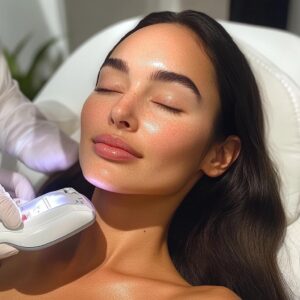
Sun damage and age spots. This is where laser facials really shine. The targeted light energy breaks down melanin in brown spots. Over several weeks, your body eliminates the damaged cells and spots fade significantly. Most people see dramatic improvement after one to three IPL treatments.
Redness and rosacea. Laser treatments specifically target the hemoglobin in broken blood vessels and diffuse redness. The heat seals off these vessels permanently, reducing overall redness and individual visible veins.
Fine lines and wrinkles. Laser facials stimulate collagen production, which plumps skin from within. Fine lines around your eyes, mouth, and forehead soften over three to six months as new collagen forms.
Acne and acne scars. Certain lasers reduce active acne by targeting oil glands and bacteria. Fractional lasers improve shallow acne scarring by remodeling skin texture through collagen stimulation.
Enlarged pores. The heat from laser treatments tightens skin and triggers collagen production around pores, making them appear smaller. Results are temporary but can be maintained with regular treatments.
Uneven texture. Ablative laser facials remove damaged surface skin and stimulate new, healthy cell growth. Your skin becomes noticeably smoother and more refined.
Dull skin. Even gentle laser treatments boost circulation and remove dead cells, revealing brighter, more radiant skin underneath.
This depends on what you’re treating and which laser we use.
For aggressive resurfacing (CO2 or Erbium laser), you might see significant improvement after one treatment. Some people do a second session six to 12 months later for additional refinement.
For non-ablative treatments, plan on three to six sessions spaced four to six weeks apart. Results are cumulative, with each treatment building on the previous one.
For IPL photofacials, most people need three to five treatments spaced three to four weeks apart to address sun damage and redness.
For Laser Genesis, you’ll need four to six treatments initially, then maintenance sessions every few months.
For maintenance, many people do quarterly laser facials to keep their skin looking its best.
Results aren’t instant. You’ll notice some immediate glow and brightness, but real changes develop over weeks to months as your skin produces new collagen and eliminates damaged cells.
Traditional spa facials cleanse, exfoliate, and hydrate temporarily. They’re relaxing but don’t create lasting change. Laser facials penetrate deeper and trigger actual skin remodeling that lasts.
Chemical peels use acids to remove skin layers. They work well for certain concerns but involve more peeling and sun sensitivity than non-ablative lasers. For severe sun damage, combining peels and laser treatments often works best.
Microneedling creates tiny injuries to stimulate collagen production. It’s effective for scars and texture but doesn’t address pigmentation or redness like lasers do.
HydraFacial is excellent for cleansing, hydration, and gentle exfoliation with zero downtime. But it doesn’t penetrate as deeply as lasers. Many people alternate between HydraFacial for maintenance and laser facials for more significant treatment.
At-home laser devices don’t have the power or precision of professional medical-grade lasers. They’re fine for very minor maintenance but can’t deliver the results you’ll get with professional treatments.
You’re a good candidate if:
You should probably wait if:
If you have darker skin (Fitzpatrick types IV-VI), we’re extra careful about laser selection. Certain wavelengths can cause hyperpigmentation in darker skin if not used correctly. We have specific protocols and safer laser options that work beautifully on all skin tones.
Laser facial pricing varies based on treatment type, intensity, and treatment area.
Gentle treatments like Laser Genesis cost less per session than aggressive CO2 resurfacing. Full-face treatments cost more than spot treatments for specific areas.
Yes, laser facials cost more than traditional spa facials. But you’re paying for medical-grade technology, physician supervision, and results that actually last. One laser facial delivers more improvement than a dozen regular facials.
We offer package pricing that reduces the per-treatment cost when you commit to a series. Since most people need multiple sessions anyway, packages make financial sense.
During your consultation, we’ll give you specific pricing based on which treatments we recommend for your skin and goals. No surprises or hidden fees.
Physician-supervised care. All laser treatments are performed under the direction of our board-certified medical director. We follow strict medical protocols and safety standards that day spas can’t match.
Medical-grade technology. We use FDA-cleared laser systems proven to deliver safe, effective results. Our equipment is properly maintained and calibrated for optimal performance.
Customized protocols. We adjust laser type, wavelength, and energy settings based on your unique skin. No generic treatments.
Experience with all skin types. We safely treat light skin, dark skin, and everything in between. Our expertise with diverse skin tones matters in our South Florida community.
Licensed medical professionals. Your laser facial is performed by licensed, trained aestheticians working under physician supervision. We’re qualified to handle complications if they arise (though they rarely do).
Comprehensive aftercare. We provide detailed instructions and the products you need to care for your skin during healing.
Convenient location. We serve Hallandale Beach residents plus clients from Aventura, Hollywood, Sunny Isles Beach, and throughout Broward County. Whether you’re near Golden Isles, Gulfstream Park, or the beach, we’re accessible.
We’re conveniently located to serve clients throughout Hallandale Beach, including Golden Isles, Three Islands, Diplomat Landing, and areas near the beach and Gulfstream Park. We also see clients from nearby Aventura, Hollywood, North Miami Beach, Sunny Isles Beach, Pembroke Pines, and throughout Broward and Miami-Dade Counties.
