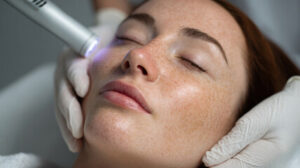
IPL isn’t technically a laser. It’s broad-spectrum light that targets both pigment and redness at the same time. Perfect for people dealing with multiple concerns.
What it treats:
How it works: The light heats pigmented cells and blood vessels. Over the following days, brown spots darken and flake off. Redness fades as broken vessels close.
Treatment details:
Best for: People with lighter skin tones who have both pigmentation and redness issues
Important: IPL doesn’t work well on darker skin tones because it can’t distinguish between your natural melanin and the spots you want to remove. If you have olive or darker skin, we’ll recommend different options.
This laser specifically targets redness. It’s absorbed by hemoglobin in blood vessels, which means it only affects red things in your skin.
What it treats:
How it works: The laser energy heats blood vessels, causing them to close and be reabsorbed by your body. The redness fades over several weeks.
Treatment details:
Best for: Anyone with persistent redness, regardless of skin tone. This laser works on all complexions.
This is the heavy hitter for texture issues, wrinkles, and scars. It removes microscopic columns of skin while leaving surrounding tissue intact, which speeds healing.
What it treats:
How it works: The laser vaporizes damaged skin tissue and heats the deeper layers. This triggers serious collagen production. New, smoother skin replaces the old damaged surface.
Treatment details:
Best for: People with significant texture issues, deep wrinkles, or scarring who can handle downtime
Not ideal for: Very dark skin tones (higher risk of pigmentation issues)
These lasers heat the deeper skin layers without removing the surface. Less dramatic than CO2, but also less downtime.
What it treats:
Treatment details:
Best for: People who want improvement but can’t take time off work
Ultra-fast lasers that break up pigment with less heat, which means less risk of side effects.
What it treats:
Treatment details:
Best for: Pigmentation issues on all skin types, including darker tones
Targets the melanin in hair follicles to permanently reduce unwanted hair.
Areas we treat:
Treatment details:
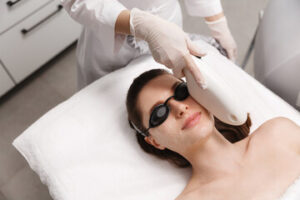
Here’s the thing: most people don’t need just one type of laser. Your skin has multiple concerns that respond to different wavelengths.
If you have sun damage with brown spots AND redness: IPL photofacial or combination of PicoWay + VBeam
If you have significant wrinkles and texture issues: Fractional CO2 for dramatic results
If you have redness from rosacea: VBeam laser
If you have dark spots on darker skin: PicoWay (safe for all skin types)
If you want overall skin quality improvement with no downtime: Non-ablative fractional laser
During your consultation, we’ll examine your skin and recommend the best approach for your specific concerns.
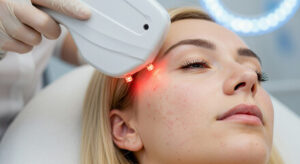
Let’s be honest about how this actually works.
Immediate results: Some treatments (like VBeam for tiny red spots) show improvement right away.
Gradual improvement: Most laser treatments work over time. IPL results appear over 7-10 days as pigment flakes off. Collagen-building lasers show results over 2-6 months.
Multiple sessions: You’ll probably need 3-5 treatments for IPL, 2-4 for VBeam, 3-5 for non-ablative lasers. CO2 might only need 1-2 treatments but with significant downtime.
Maintenance: Some results last years (like CO2 resurfacing), while others need annual touch-ups (like IPL for sun damage).
People who protect their skin from the sun maintain results longer. In Miami Beach, that means serious sun protection.
This can’t be stressed enough. You live in one of the sunniest places in America. After laser treatment, your skin is vulnerable to UV damage.
What you must do:
Why this matters: UV exposure on healing skin can cause permanent hyperpigmentation. All your time and money wasted because you didn’t protect your skin.
If you can’t commit to sun protection, laser treatments aren’t worth it. The sun will undo everything.
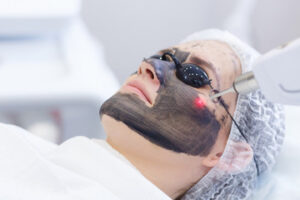
You might be a good candidate if you:
Not all lasers work on all skin types. This is crucial.
Lighter skin (Fitzpatrick I-III): Can do any laser treatment safely
Medium skin (Fitzpatrick IV): Most lasers work with adjusted settings. IPL needs caution.
Darker skin (Fitzpatrick V-VI): IPL is generally not safe. Aggressive CO2 has higher risk. PicoWay, VBeam, and conservative non-ablative lasers work well.
If you have darker skin, don’t assume laser treatments are off the table. We just need to choose the right technology and settings. During your consultation, we’ll assess your skin type and recommend the safest, most effective options.
Absolute no:
Proceed with caution:
2-4 weeks before:
1 week before:
Day of:
Most treatments take 15-45 minutes. We’ll provide protective eyewear. Some treatments use numbing cream if needed.
You’ll feel sensations ranging from warmth to rubber band snaps, depending on the laser. Most people find it tolerable. If you’re uncomfortable, we can adjust settings or take breaks.
Your skin will be red immediately after treatment. This is normal.
Immediate (first 24 hours):
Days 1-7:
Weeks 1-4:
Pricing varies by treatment type and area size.
IPL Photofacial: $300-$600 per session
VBeam Laser: $350-$600 per session
Fractional CO2 Laser: $1,500-$2,500 per session
Non-Ablative Fractional Laser: $400-$800 per session
PicoWay/PicoSure: $400-$700 per session
Laser Hair Removal: $100-$500 per session (depends on area)
Treatment series (total cost):
Package deals available: Multi-session packages reduce per-treatment costs.
Financing options: Payment plans to spread cost over time.
Free consultation: Always. We’ll give you exact pricing for your specific needs.
Common and temporary:
Less common:
Rare:
Multiple Laser Options: We have different lasers for different concerns. We’re not trying to make one technology work for everything.
Experience with All Skin Types: We’ve successfully treated patients from very fair to very dark skin. We know which lasers are safe for which complexions.
Medical Supervision: Our treatments are performed by licensed medical professionals under physician oversight. This is medical treatment.
FDA-Approved Technology: We use only FDA-cleared devices that are regularly maintained and calibrated.
Honest Assessment: We’ll tell you if laser treatment isn’t the best option for your concern. We’ll recommend alternatives when appropriate.
Miami Beach Expertise: We understand the challenges of maintaining results in South Florida’s sun-intense environment.
Free Consultations: See the facility, meet the team, get a treatment plan before committing.
Convenient Location: Easy to reach from South Beach, Mid-Beach, North Beach, Lincoln Road, and surrounding areas.
