Laser Resurfacing
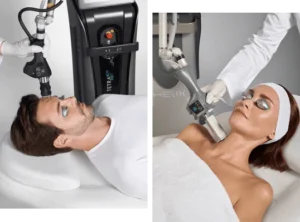
Fractional CO2 laser is the gold standard for acne scarring. It creates thousands of microscopic channels in your skin, removing damaged tissue and triggering collagen production. Your body spends the next 3-6 months rebuilding collagen, which gradually fills in and smooths out scars.
The catch? Recovery sucks. Your face will be red, swollen, and peeling for 7-10 days. You cannot go to work. You cannot hit the beach. You cannot pretend nothing happened. Plan accordingly.
Results are worth it though. One aggressive CO2 treatment can improve scars by 30-50%. A series of 2-3 treatments can get you to 60-80% improvement for the right scar types.
Fractional erbium lasers are gentler with less downtime (3-5 days) but you’ll need more sessions for similar results. Good option if you can’t take a week off work.
Microneedling
This uses tiny needles to create controlled injuries that trigger collagen production. It’s less aggressive than laser resurfacing, which means less downtime (2-3 days of redness) but also less dramatic per-session improvement.
You need 4-6 sessions spaced 4-6 weeks apart. Each treatment improves scars by about 10-15%. Do the math. That’s why it takes months.
Adding PRP (platelet-rich plasma from your own blood) boosts results. The growth factors in PRP accelerate healing and collagen production. It’s an extra cost but worth it for stubborn scarring.
RF microneedling (like Morpheus8) combines needles with radiofrequency energy for deeper remodeling. More effective than regular microneedling but also more expensive and slightly more downtime.
Chemical Peels
TCA CROSS is a technique where we apply high-strength TCA (trichloroacetic acid) directly into ice pick scars with a tiny applicator. It causes controlled scarring that makes the scar build up from the bottom. Sounds counterintuitive but it works. You need multiple sessions.
Medium-depth TCA peels (20-35%) can improve overall texture and shallow scarring. You’ll peel for 5-7 days but results are noticeable.
Salicylic acid peels help with active acne and mild textural issues. Less dramatic for deep scarring but good for overall skin quality between more aggressive treatments.
Subcision
For rolling scars, we use a needle or small blade to cut the fibrous bands tethering your skin down. This releases the tension and allows the depressed area to lift. Often combined with filler for immediate improvement while your body generates new collagen.
You’ll have bruising for 1-2 weeks. This is normal and expected. Don’t schedule subcision right before important events.
Dermal Fillers
Hyaluronic acid fillers (Restylane, Juvederm) can temporarily fill depressed scars for immediate improvement. Results last 6-12 months. This isn’t a permanent solution but works great for special events or while you’re doing other treatments.
Bellafill is FDA-approved specifically for acne scars and lasts 5+ years. It’s more expensive upfront but the longevity makes it cost-effective if you need volume replacement.
Sculptra stimulates your own collagen production over time. Takes 3-6 months to see full results but improvements last 2+ years.
Punch Techniques
For deep ice pick or boxcar scars that won’t respond to other treatments, we can surgically remove or elevate them. Punch excision removes the entire scar. Punch elevation lifts the base of the scar to surface level. These create tiny wounds that heal flatter than the original scar.
You’ll have small scabs for about a week. Then we typically follow up with laser resurfacing to blend everything together.
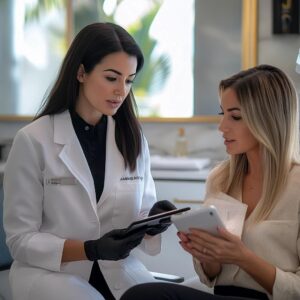
Your active acne must be controlled first. This is critical. If you’re still breaking out regularly, we need to address that before we treat scarring. New breakouts during scar treatment can create new scars or worsen existing ones.
We’ll help you get active acne under control with prescription topicals, oral medications, or a comprehensive skincare program. Once you’ve been clear for 2-3 months, we can start scar treatment.
If you’ve taken Accutane, you need to wait 6-12 months after stopping before any resurfacing procedures. Accutane thins your skin and impairs healing. Treating too soon causes severe complications including permanent scarring.
Sun exposure must be minimized. This is especially challenging in Dania Beach. You live near the beach. You’re outdoors a lot. But sun exposure before treatment tans your skin (can’t treat tanned skin safely) and sun exposure after treatment causes hyperpigmentation that makes scars look worse.
Plan your treatments during times when you can realistically avoid the beach and outdoor activities. Fall and winter are ideal.
Let’s be honest about what treating acne scars means for your lifestyle here.
You can’t hit John U. Lloyd Beach State Park during recovery. Sun exposure on freshly treated skin causes dark spots (post-inflammatory hyperpigmentation) that can be worse than the original scars. This happens even with sunscreen. You need to avoid direct sun completely for 2-4 weeks after aggressive treatments.
Saltwater and chlorine are off-limits during healing. If you swim regularly, plan treatments when you can stay out of the water.
Outdoor work or activities need to be scheduled around treatments. If you work outside or spend significant time in the sun, aggressive treatments might not be practical for you. We’ll find gentler alternatives that allow you to maintain your lifestyle.
The humidity actually helps. One advantage of Florida’s climate is the moisture in the air keeps your healing skin from getting too dry. Silver lining.
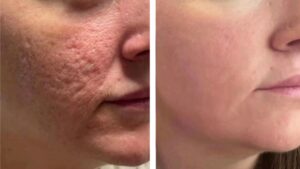
Here’s what actually happens after treatment:
Laser resurfacing: Face looks like you have a bad sunburn for 3-5 days. Peeling happens days 5-10. New pink skin emerges underneath. Pink fades over 4-8 weeks. Collagen remodeling continues for 3-6 months. That’s when you see maximum improvement.
Microneedling: Red and slightly swollen for 24-48 hours. Light flaking days 3-5. Back to normal by day 7. Gradual improvement over next 4-6 weeks as collagen builds. Need multiple sessions for cumulative results.
Subcision: Bruising for 7-14 days. Swelling for 3-5 days. Immediate lift in treated areas that improves further as healing progresses over 2-3 months.
Chemical peels: Depends on depth. Light peels mean 2-3 days of flaking. Medium peels mean 5-7 days of visible peeling. Skin looks worse before it looks better.
Most people need a combination of treatments for optimal results. A typical treatment plan might be: subcision first to release rolling scars, then a series of microneedling or laser sessions to improve texture, followed by filler if needed for remaining depressions.
Total timeline? 6-12 months from start to final results. Anyone who promises faster results is either using very mild treatments (limited improvement) or not being honest with you.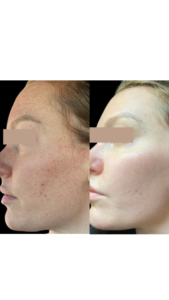
Let’s talk about what’s actually achievable.
Most people see 50-70% improvement with a comprehensive treatment series. That means your scars will be significantly better but probably not completely gone. Some shallow scarring might reduce to the point where it’s barely noticeable. Deep scars will improve but remain visible to some degree.
Complete elimination is rare, especially for severe scarring. The goal is improvement, not perfection. If someone promises to completely remove your scars, be skeptical.
Some scars respond better than others. Shallow boxcar and rolling scars often see 70-80% improvement. Deep ice pick scars might only improve 40-50% even with multiple aggressive treatments. We’ll give you honest expectations during consultation based on your specific scarring.
Newer scars respond faster than old ones, but even scars from years ago can be improved significantly. It just might take more treatments.
If you have darker skin (Fitzpatrick types IV-VI), we need to be more conservative. Aggressive treatments like laser resurfacing carry higher risk of post-inflammatory hyperpigmentation (dark spots) on darker skin.
This doesn’t mean you can’t get treated. It means we adjust the approach. We might use gentler laser settings, focus more on microneedling and peels, or do a longer series of lighter treatments instead of fewer aggressive ones.
Many Dania Beach residents have diverse skin tones. We have experience treating all skin types safely. We just need to be honest about the modified approach required for darker skin.
Acne scar treatment isn’t cheap. Here’s what you’re looking at:
Microneedling: $300-500 per session. You’ll need 4-6 sessions. Total: $1,800-3,000.
Laser resurfacing: $1,500-2,500 per session for full face. Most people do 2-3 sessions. Total: $3,000-7,500.
Subcision: $500-1,000 per session (depends on number of scars treated).
Chemical peels: $200-500 per session. Need multiple for scar improvement.
Fillers: $600-800 per syringe. Might need multiple syringes depending on scarring extent.
Combination treatment plans (which work best) can run $4,000-8,000 total over 6-12 months. Yes, it’s expensive. But consider: you’ve probably been dealing with these scars for years. They affect how you see yourself. The investment in improving them can genuinely change your life.
We offer financing options and package pricing to make treatment more accessible. During consultation, we’ll create a treatment plan with transparent pricing so you know exactly what you’re getting into.
We’re a medical spa with actual medical supervision. Acne scar treatment requires expertise. The wrong settings on a laser can cause permanent scarring or pigmentation changes. Improper technique with subcision or punch procedures can make scars worse.
Our practitioners have extensive training in scar treatment across all skin types. We know which treatments work for which scars, and we’re conservative with darker skin tones.
We’re honest about limitations. If we don’t think we can help you, or if you need a different type of provider (like a facial plastic surgeon for very severe scarring), we’ll tell you. We’d rather refer you appropriately than take your money for treatments that won’t work.
We understand the Florida sun challenge. We live here too. We know you can’t just avoid the sun completely. We’ll help you plan treatments during times that fit your lifestyle and give you realistic aftercare protocols.
Manhattan Laser Spa serves residents throughout Dania Beach, Hollywood, Fort Lauderdale, Hallandale Beach, and all of Broward County. Whether you’re near Dania Pointe, the Marina District, or along Federal Highway, we’re conveniently located.
