Cheek Filler in Miami: The Syringe Isn't the Problem
A $299 cheek filler deal isn’t a deal. It’s a math problem, and the math doesn’t work.
Miami’s market rate for cheek filler runs roughly $800–$1,200 per syringe — that’s general market context, not a number we’re quoting as our own price, but it’s the range you’ll see across legitimate providers in this city. So when you see $299, the honest answer is the same one we give about $19 laser hair removal sessions: the price is telling you something about the product or the person holding the needle, whether the ad says so or not. Nobody is eating a $500–$900 loss per syringe out of generosity. Something got cut to hit that number, and in this procedure, “something got cut” usually means a needle going into your face.
Three Ways to Add Volume to a Cheek — and They’re Not Interchangeable
Most people walk in thinking the decision is “which filler is best.” It’s not. It’s “which timeline and which commitment am I actually signing up for,” because the three main approaches to cheek volume don’t do the same thing at the same speed.
Juvederm Voluma XC is hyaluronic acid — HA. It delivers volume at the moment of injection. You leave with the result already there, for better or worse, which is exactly why it’s the default a lot of people reach for: what you see at the two-week follow-up is close to what you’re going to live with.
Sculptra is a different category of product entirely — poly-L-lactic acid, not HA. It doesn’t fill space the day you get it. It works by stimulating your own body to build collagen gradually, over weeks and months, which means the volume you end up with months from now is not the volume you see on the day of injection. If you’re expecting Sculptra to look like Voluma on day one, you’re going to be disappointed by a treatment that’s doing exactly what it’s supposed to do, just on its own clock.
Radiesse is the other non-HA option — calcium hydroxylapatite — and it works the same general way Sculptra does: gradual collagen stimulation rather than instant fill, though its onset and build are its own thing, not identical to Sculptra’s.
Then there’s a third path that isn’t a syringe product at all: autologous fat grafting, using your own tissue instead of a manufactured filler. That’s a structurally different approach — not a brand decision, a different category of procedure.
So the real question isn’t “Voluma or Radiesse.” It’s: do you want volume now, or are you comfortable with volume that builds over months in exchange for a different longevity profile? That’s a timeline question before it’s ever a brand question.
Who’s Legally Allowed to Inject It
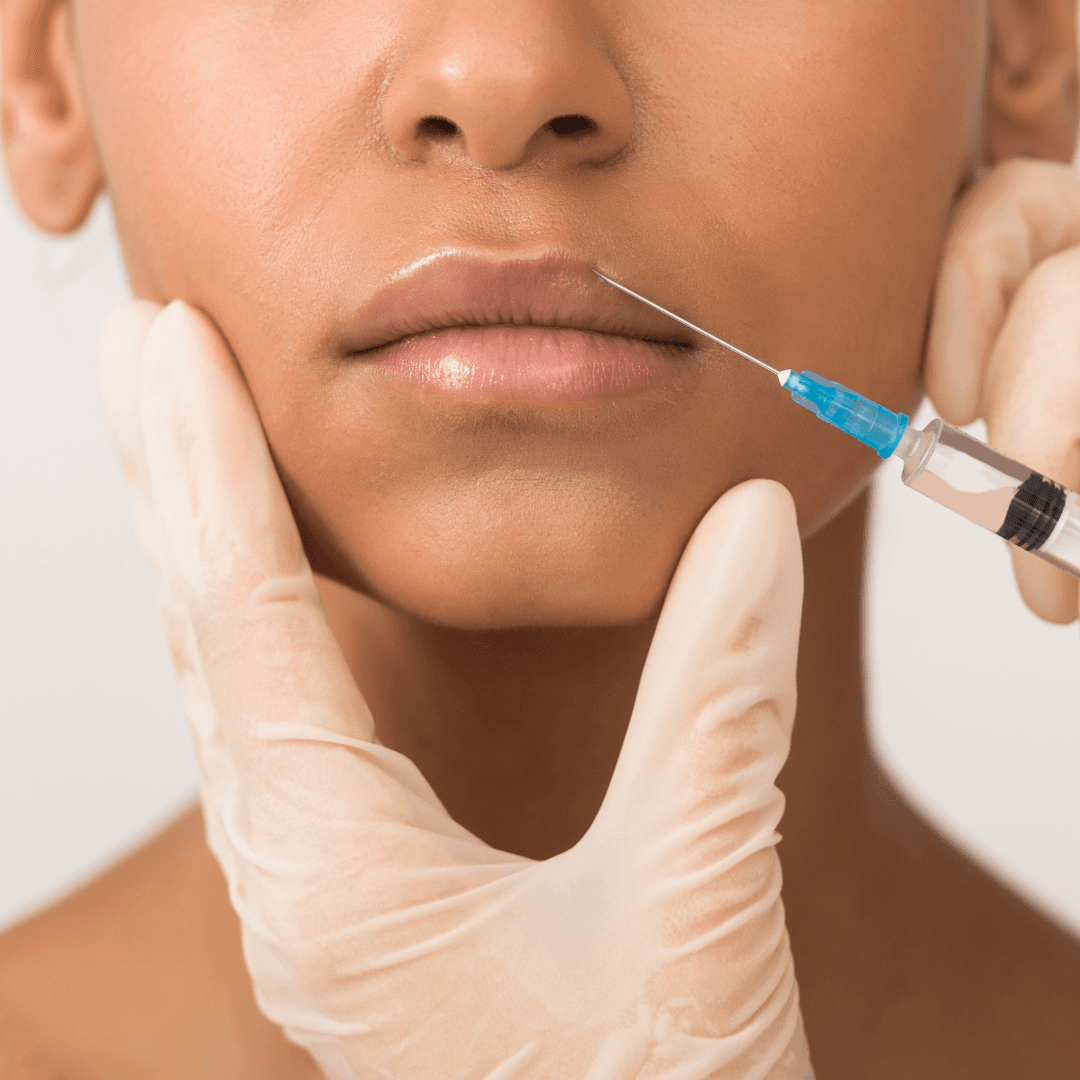
This is the part almost nobody puts on a cheek filler page, and it should be the first thing you ask any clinic before you book — not just us. Florida law requires that dermal filler be injected by a licensed medical professional: an MD, an ARNP, a PA, or an RN working under physician supervision. That’s not a marketing point. It’s a baseline legal requirement, and it applies everywhere in this state, not just at clinics that choose to mention it.
If a clinic won’t tell you plainly who’s doing the injecting and under what license, that’s your answer before you ever get to product selection.
The Product Matters Less Than the Hand Holding It
Here’s the part that’s harder to sell but more important to know: two injectors using the exact same syringe of the exact same product can produce completely different results. That’s not marketing. That’s the reality of a technique-dependent procedure.
The number-one reason cheek filler ends up looking unnatural — the “pillow face” look people are actually afraid of when they hesitate on this procedure — isn’t the brand of filler. It’s overfilling. It’s not that Voluma is wrong or Radiesse is wrong. It’s that more product went in than the face needed, placed without restraint, and that’s an injector decision, not a syringe decision.
This is why we’d rather talk about the person doing the injecting than the name on the box. A skilled injector working conservatively with any of these products will produce a result that looks like your face, just with the volume it lost back. An unskilled injector chasing a dramatic before-and-after will overfill regardless of which product is in the syringe. Restraint is the skill. The product is just the tool.
Why the Cheap Deal Is Cheap
Go back to that $299 numbers problem. A legitimate syringe of name-brand HA filler, injected by a licensed medical professional in a real clinical setting, costs what it costs for reasons that don’t disappear because an ad undercuts the market. So when the price comes in hundreds of dollars below the going rate, one or more of three things is usually true: the product is counterfeit, passed off as a brand name it isn’t; the person injecting it isn’t licensed the way Florida law requires; or the syringe has been diluted — less active product stretched to cover more “volume” than it should.
Any one of those cuts a real cost out of the price. All three together are how you get to $299. Tie that back to the licensing section above: a legitimate injector and a legitimate, undiluted product are two of the actual costs built into a real price. A rock-bottom number has to come from somewhere, and it’s rarely coming out of the clinic’s profit margin.
The Tradeoff Nobody Puts on the Price List: Reversibility
There’s a real structural difference between HA and non-HA filler that has nothing to do with how good the injector is, and it’s worth weighing before you choose.
HA filler — Voluma, for instance — can be dissolved with hyaluronidase if you’re unhappy with the result or if a complication occurs. That reversibility is a built-in safety net.
Sculptra and Radiesse don’t have that same undo button. Because they work by stimulating your own collagen rather than sitting in place as a dissolvable gel, they’re not easily reversed the same way HA filler is. That’s not a reason to avoid them — plenty of people choose the longer collagen-building route on purpose, for the different longevity it offers. It’s a tradeoff to go in knowing, not a surprise to discover later.
How We Handle the Decision Here
We don’t start this conversation with a price list, because the honest answer is that candidacy and product choice depend on your face, not a flat menu number — a free consultation and Fitzpatrick skin-type assessment come before any treatment decision gets made. We schedule a 2-week follow-up to look at how the result settled and adjust if it needs adjusting. And there’s no upsell sequence waiting for you once you’re in the chair — no push toward “just one more syringe” beyond what your face actually needs.
The Honest Answer
This isn’t a choice between filler brands. It’s a choice between three different timelines — instant HA volume, slow-building non-HA collagen, or your own fat — made by a licensed professional whose restraint matters more than whichever syringe they picked up. Candidacy and expected results get determined in person, not off a price list.
Location
Manhattan Laser Spa — Sunny Isles Beach, FL