Laser Genesis vs. CO2: Why We Don't Treat Them as the Same
“Skin tightening” gets used as one category name stretched over machines that work in opposite ways. Under our own laser skin tightening and resurfacing menu, we offer HELIX CO2 Laser Resurfacing, Clear + Brilliant, Laser Genesis, Cynosure Elite Plus, Fractional CO2, and Laser Skin Resurfacing (Laser Peel). Most clinics don’t explain which one you’re actually getting, because explaining it takes longer than just booking you.
Here’s the split that actually matters: non-ablative treatment heats the skin without wounding it. Ablative treatment removes or injures the surface on purpose to force a bigger rebuild. Laser Genesis is non-ablative. HELIX CO2 and Fractional CO2 are ablative. That difference decides which problem each one solves — not which one sounds more advanced on a treatment menu.
Laser Genesis: Heat Without Wounding the Surface
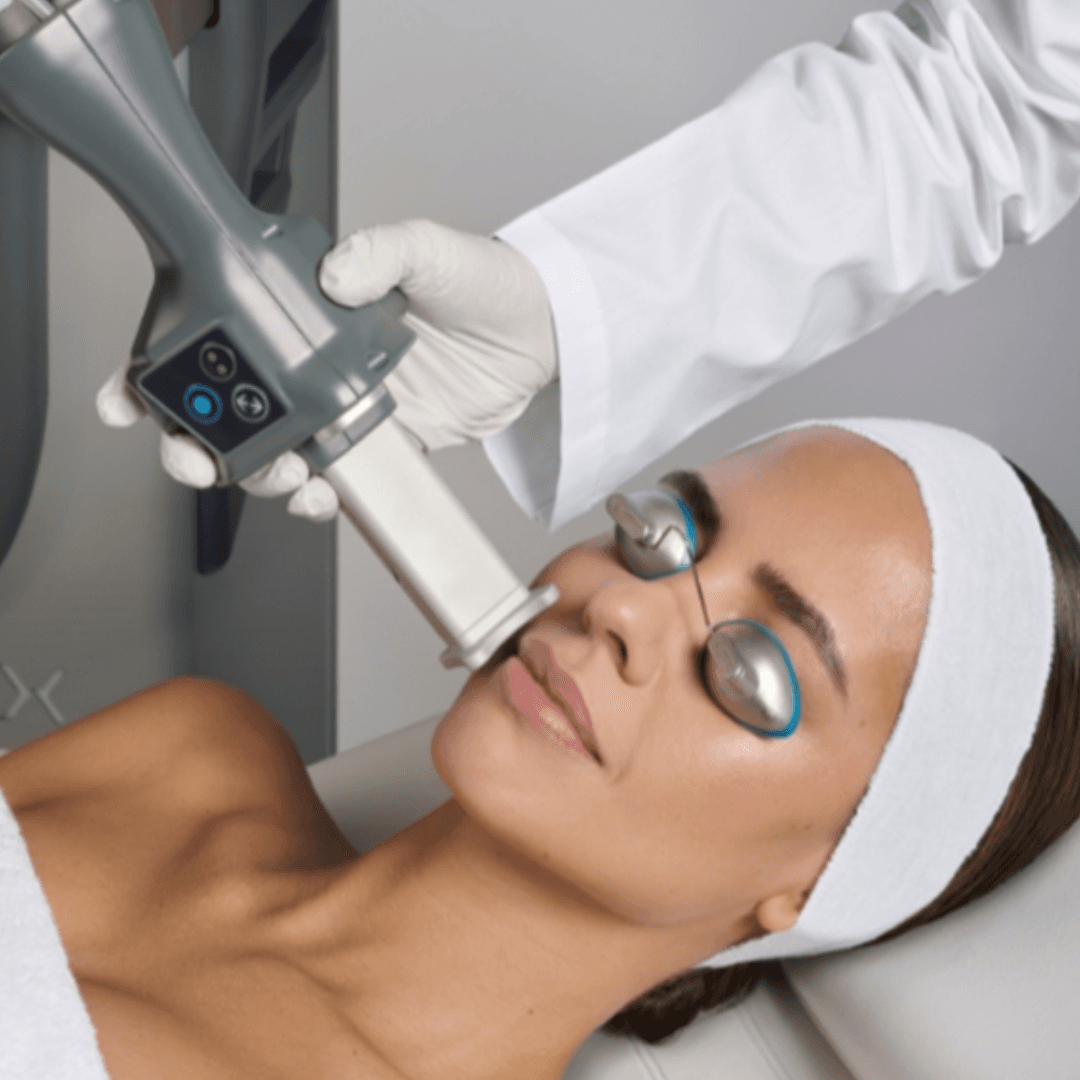
Laser Genesis heats the skin without injuring the surface. Nothing peels. The skin you see the day after treatment is the same skin that was there the day before — the change happens underneath, gradually, as collagen rebuilds over the following weeks.
That mechanism makes it a fit for early-stage concerns: persistent redness, fine lines, enlarged pores, early sun damage that hasn’t turned into deep texture change yet. It’s a maintenance tool, not a correction tool. It works through repeated, gentle heating across a series of sessions rather than one deep injury in a single visit. Little to no downtime is why people default to it — but little downtime and “does the same job as CO2” are two different claims.
Ablative CO2: Resurfacing Means Removing the Surface
Ablative CO2 solves a different problem. Instead of heating the dermis and leaving the surface alone, it removes or injures the top layer on purpose. The body treats that as a wound to rebuild, not a temperature change to quietly absorb — which produces a stronger collagen response than heat alone.
We use HELIX CO2 and Fractional CO2 for this. The “fractional” part matters: rather than resurfacing every cell in the treated area, the laser works in a pattern of tiny columns, leaving the tissue between them untouched. Still ablative, still real resurfacing — but fractional delivery is a deliberate middle ground between doing nothing and wounding everything.
This is the category for deeper wrinkles, established texture damage, and scarring that heat alone isn’t built to reach.
The tradeoff is downtime, and it’s real. Expect redness and peeling for several days — how many depends on how much surface area is treated and how aggressively, which isn’t a number we’ll give you before we’ve looked at your skin. Anyone quoting an exact recovery timeline before a consultation is guessing.
More Downtime Isn’t a Better Result
A deeper treatment isn’t superior to a gentler one. It’s appropriate when the problem is deep enough to need it, and it’s the wrong tool when it isn’t. Redness and early fine lines don’t need a wound to heal from. Deep texture damage and scarring often do.
Every clinic will tell you they use “the latest laser.” What matters more is the specific device and what it’s actually built to fix. A clinic that steers you toward whichever option sounds more intense — more downtime, more “clinical” — without asking what you’re trying to correct first isn’t making a recommendation. It’s upselling a sensation.
How the Right Device Gets Picked
We offer a free consultation and skin-type (Fitzpatrick) assessment before any treatment starts. The point of it is to figure out which mechanism your skin actually needs, not to steer you toward the higher price tag. Sometimes the honest answer is both — Genesis for maintenance, CO2 later if deeper damage shows up — not one locked in forever.
We don’t quote a flat per-session price for either device on this page. No upsells, and also no guessing at a number before we’ve seen your skin and your Fitzpatrick type.
If Melasma Is What You’re Dealing With, Stop Here
One exception matters enough to say plainly: if melasma is your main concern, ablative or fractional CO2 is not recommended for active melasma. The heat from that kind of resurfacing can trigger rebound hyperpigmentation — the pigment comes back, and it comes back darker than it started.
We manage melasma. We don’t cure it. Heat-based resurfacing works against that management. If pigment is the actual problem, that calls for PicoWay, which breaks up pigment with picosecond pressure waves instead of heat. That’s a separate treatment path from skin tightening, and it’s worth understanding on its own before you book either one.
Location
Manhattan Laser Spa — Sunny Isles Beach, FL