Marionette Lines: Why the Same Crease Needs a Different Fix
Same Crease, Different Cause
Two people walk in with what looks like the identical problem — a vertical crease running from the corner of the mouth down toward the chin — and we recommend two completely different treatments. That’s not us hedging. Marionette lines come from a combination of volume loss and skin laxity, not just one or the other, and the ratio between those two causes is different on every face.
Someone in their late 30s or early 40s with a line that’s mostly a shadow, sitting on skin that still snaps back when you pinch it, is dealing with volume loss. The fat pad under that crease has thinned, so the skin folds into the gap. Someone a decade or two further along, where the skin stays creased even at rest and feels looser along the jaw, has laxity layered on top of that. Filler can fix the first problem well. It cannot fix the second one by itself. The question we actually need answered before touching a syringe is which of those two things is happening on your face — because the answer changes everything downstream.
The Product Matters as Much as the Diagnosis
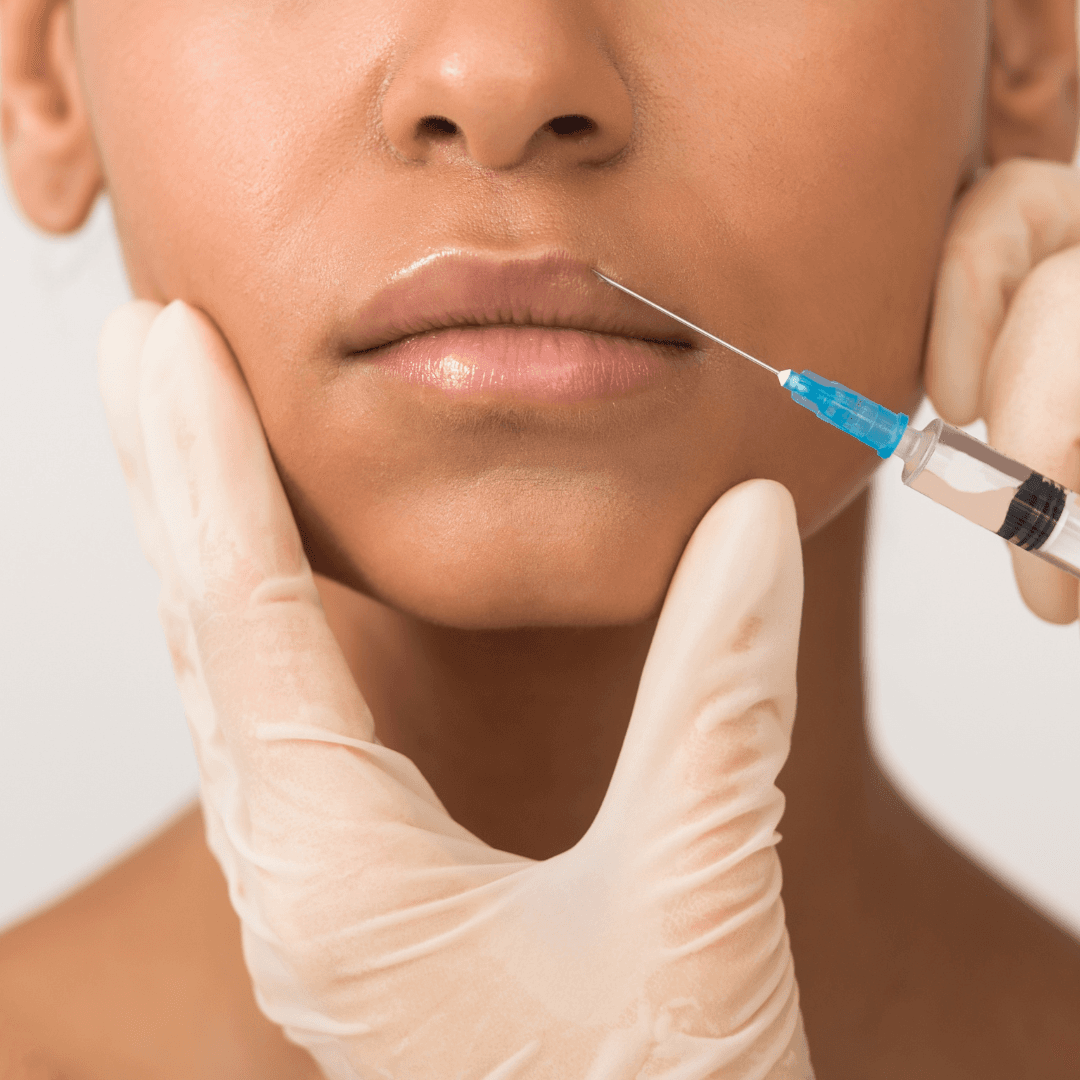
Assuming volume loss is driving it, the next decision is which product — and reaching for whatever you’d use on a nasolabial fold is a mistake here. The corners of the mouth move when you talk and smile, pulling and compressing dozens of times in an ordinary conversation. A stiffer filler that looks fine sitting still can look rigid or rope-like the moment you laugh.
That’s why we lean on Restylane Refyne and Restylane Defyne for this area, and why Juvederm Vollure is also in the rotation — HA products chosen to move with the tissue rather than hold it rigid underneath it.
There’s also a non-filler option worth knowing about if the volume loss is gradual and the goal is subtler, slower-building correction: Sculptra, which uses poly-L-lactic acid to stimulate your own collagen production over a series of sessions instead of adding volume on the spot. We cover how that process actually works on our Sculptra page.
Filler Adds Volume. It Doesn’t Tighten Skin.
Here’s the part that gets glossed over when filler is marketed as a universal fix: HA gel sits under the fold and pushes it up and out from beneath. If the skin above it is loose, you’ve padded the gap, but the skin itself hasn’t changed. If laxity is the main driver, filler alone won’t fully smooth the line. You’ll see improvement, sometimes meaningful improvement, but not the kind of correction you were picturing. We’d rather tell you that before you pay for a syringe than after.
Where Overfilling Goes Wrong
This is where the trouble usually starts. When filler alone can’t fully smooth a laxity-driven line, the instinct — ours or the client’s — is to add more product to force the issue. Overfilling is the number-one reason filler looks bad anywhere on the face, and this area punishes it fast: you can’t out-volume loose skin, you can only push it further out, which reads as heaviness along the jawline instead of a smoothed crease.
It also shows up in motion, not just in a still photo. A slightly overfilled cheek can look fine when you’re not talking. An overfilled marionette area looks off the moment you laugh, because the product now has to move along with tissue carrying more weight than it was built to carry. Restraint matters more here than almost anywhere else we inject.
When We Recommend the Laser Instead
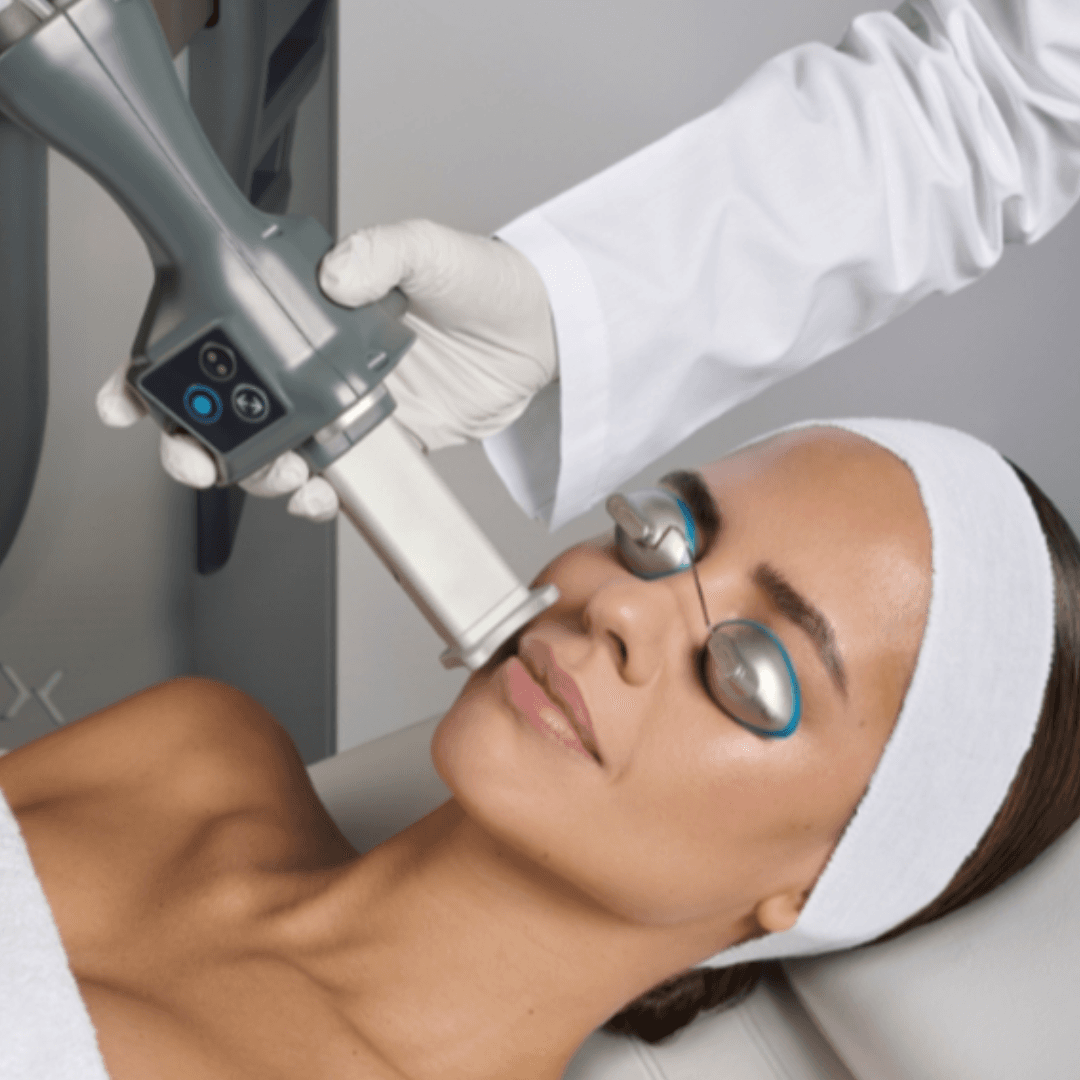
When laxity is clearly the bigger piece of the problem, the honest plan isn’t a bigger syringe — it’s shifting part of the work to something that actually addresses loose skin. That’s where treatments like HELIX CO2 Laser Resurfacing, Fractional CO2 Laser, Laser Genesis, and Clear + Brilliant come in. These stimulate collagen in the skin itself, which is the piece filler was never designed to touch.
For some clients, skin tightening alone is the right call, with filler held off until there’s enough structural support underneath for it to hold its position. For others, the honest combination is a conservative amount of filler alongside a tightening treatment — enough HA to restore what’s genuinely missing, paired with a device doing the job of firming what’s loose, instead of asking one syringe to do both jobs badly. More on how we evaluate that combination is on our laser skin tightening page.
What Actually Happens in a Consultation
None of this gets sorted out by guessing from a photo. Florida law requires filler to be injected by a licensed medical professional — an MD, ARNP, PA, or RN working under physician supervision — and that exam is also where we figure out which problem you actually have. We offer a free consultation and skin-type assessment before any treatment, and for filler specifically, that’s where we check skin quality, pinch-test the laxity, and decide whether you’re a volume case, a laxity case, or both.
We also build in a 2-week follow-up check-in, because filler settles and swelling resolves over that window, and that’s the honest point to assess whether anything needs adjusting. More detail on the products and process is on our dermal fillers page.
Your anatomy decides the plan. Not a menu.
Location
Manhattan Laser Spa — Sunny Isles Beach, FL