Not all dark spots are the same. Different types need different treatments.
Age Spots (Sun Spots, Liver Spots)
Flat, brown spots that show up on your face, hands, shoulders, and arms. They’re caused by years of sun exposure. Usually show up after age 40, though younger people get them too if they’ve spent a lot of time in the sun.
Melasma
Larger, darker patches usually on your face (cheeks, forehead, nose, upper lip). More common in women. Often triggered by pregnancy or birth control. Notoriously stubborn and hard to treat. Can come back easily with sun exposure.
Post-Inflammatory Hyperpigmentation (PIH)
Dark marks left behind after acne, cuts, burns, or other skin injuries. Common in people with darker skin tones. Can take months or even years to fade on their own.
Freckles
Small brown spots, usually genetic. More common in people with fair skin. Get darker with sun exposure.
Dark Patches from Scarring
Hyperpigmentation that develops in scar tissue. Can be from acne scars, surgical scars, or injury scars.
Each type responds best to specific treatments. That’s why consultation matters. We need to figure out what kind of dark spots you have before choosing the right treatment.
We offer several effective options. The right one depends on your skin type, the type of dark spots, and how aggressive you want to be.
IPL uses broad-spectrum light to target melanin in your skin. The light energy heats up the dark pigment, breaking it apart. Your body then naturally clears away the fragmented pigment over the next few weeks.
Best for: Sun spots, age spots, freckles, overall uneven tone
Not recommended for: Very dark skin tones (Fitzpatrick V-VI)
How it works: The IPL device flashes light across your skin. Feels like rubber band snaps. Takes 20-30 minutes. After treatment, your spots will actually get darker before they flake off like coffee grounds. This is normal. You’ll need 3-5 sessions spaced 2-4 weeks apart.
Downtime: Mild redness for a few hours to a day. You can wear makeup the next day.
We use Q-switched lasers or picosecond lasers to target individual dark spots. These lasers are more precise than IPL and work well for stubborn spots.
Best for: Isolated dark spots, resistant pigmentation, safe for darker skin tones when settings are adjusted properly
How it works: The laser delivers ultra-short pulses that shatter the pigment. You’ll see a frost or whitening immediately, then the spot will darken and crust over. It peels off in 1-2 weeks.
Downtime: The treated spots will be darker and possibly crusty for 1-2 weeks. Most people can cover this with makeup after a couple days.
Medical-grade peels use acids (glycolic, salicylic, TCA, or specialty melasma peels) to exfoliate the top layers of skin and reduce pigment.
Best for: Melasma, overall uneven tone, safe for darker skin tones, people who can’t do laser treatments
How it works: We apply the peel solution to your skin. It causes controlled exfoliation over the next several days. As the old skin peels off, it takes pigment with it. You’ll need multiple treatments.
Downtime: Depends on the peel strength. Light peels have minimal peeling (3-5 days). Deeper peels have more significant peeling (5-7 days).
Medical-grade ingredients like hydroquinone, tretinoin, kojic acid, and tranexamic acid lighten pigmentation over time.
Best for: Maintenance after procedures, melasma, mild dark spots, combination with other treatments
How it works: You apply these creams daily. They work by blocking melanin production and increasing cell turnover. Takes 8-12 weeks to see results.
Downtime: None, though some people experience mild irritation initially.
Honestly, the best results usually come from combining treatments. For example, IPL or laser to break up pigment, followed by chemical peels to continue lightening, plus prescription topicals for maintenance.

This is critical. IPL and some lasers can make dark spots worse if used incorrectly on darker skin tones.
Here’s why: IPL and certain lasers target melanin. If you have more melanin in your skin overall (darker skin tone), the device can heat up your entire skin, not just the spots. This can cause burns or trigger even more hyperpigmentation.
That’s why we assess your skin type using the Fitzpatrick scale (I-VI) before recommending treatment.
For Fair to Medium Skin (Fitzpatrick I-III): IPL works great. Q-switched lasers work well. Most treatments are safe when done correctly.
For Olive to Medium Brown Skin (Fitzpatrick IV): IPL can work but needs conservative settings. Q-switched Nd:YAG lasers are safer. Chemical peels are a good option.
For Brown to Dark Brown Skin (Fitzpatrick V-VI): IPL is generally too risky. We use Q-switched Nd:YAG lasers with very conservative settings. Chemical peels designed for darker skin work well. Topical treatments are essential.
At Manhattan Laser Spa, our specialists know how to adjust settings for different skin types. We don’t take chances with your skin.
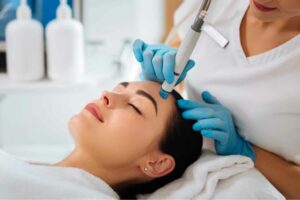
Let’s be real about what happens.
Before Treatment:
We’ll examine your skin, identify what type of dark spots you have, and assess your skin type. We’ll talk about which treatment makes the most sense. We might take photos so you can see your progress.
If you’re prone to cold sores and getting laser around your mouth, we’ll prescribe antiviral medication.
You’ll need to avoid sun exposure for at least 2 weeks before treatment. Stop using retinol a week before. Wear SPF 30+ daily.
During Treatment:
IPL: Feels like rubber band snaps. Takes 20-30 minutes. Some people use numbing cream, others don’t need it.
Laser: Quick zaps on individual spots. Usually takes 15-30 minutes depending on how many spots we’re treating.
Chemical Peel: We apply the solution, you feel tingling or mild burning, we remove it. Takes 15-20 minutes.
Immediately After:
Your skin will be red. With IPL, your spots might look darker right away (this is good, it means the pigment is responding). With laser, spots might have a white frost that fades to darker color.
Days 1-7:
IPL: Spots get very dark and crusty, then flake off. Looks like coffee grounds. Don’t pick at them.
Laser: Spots darken, possibly crust, then peel off.
Chemical Peel: Your skin will peel and flake.
Weeks 2-12:
Your skin keeps improving as pigment clears and new skin cells develop. You’ll need multiple sessions for full results.
Full Results:
Most people need 3-5 treatments to see significant improvement. Spacing depends on the treatment (usually 2-6 weeks apart). Results keep improving for months after your last treatment.
Here’s the thing: dark spots can come back. Sun exposure will trigger new pigment production. That’s why maintenance and sun protection are non-negotiable.
You can get rid of your current dark spots. But if you don’t protect your skin, they’ll come back. Often within months.
The Sun Problem:
UV rays are still hitting your skin every single day. Even on cloudy days. Even through windows while you’re driving. This UV exposure triggers the same melanin response that created your dark spots in the first place.
What You Need to Do:
Wear broad-spectrum SPF 30-50+ every single day. Reapply every 2 hours if you’re outside. This isn’t optional. It’s the most important thing you can do.
Use physical sunscreen (zinc oxide, titanium dioxide) rather than chemical sunscreen. It works better for preventing pigmentation.
Wear hats and sunglasses. Avoid peak sun hours (10am-4pm) when possible.
Maintenance Treatments:
Most people need touch-up treatments every 6-12 months to keep dark spots at bay. Think of it like going to the dentist. You need regular cleanings to keep your teeth healthy.
Prescription Topicals:
Using lightening serums or prescription creams helps prevent new spots from forming. Your provider can recommend what works best for your skin.
Your aftercare determines your results. Don’t mess this up.
First Week:
Keep your skin clean with gentle, fragrance-free cleanser
Moisturize frequently, especially if you’re peeling
Don’t pick at crusty spots or peeling skin (seriously, don’t)
Avoid makeup for 24-48 hours after treatment
Skip workouts, saunas, hot showers for 2-3 days
Absolutely no sun exposure
Ongoing:
SPF 30-50+ every single day. Non-negotiable in South Florida.
Physical sunscreen (zinc oxide, titanium dioxide) works best
Reapply throughout the day if you’re outside
Wear wide-brimmed hats
Avoid tanning beds forever
Don’t use harsh scrubs or exfoliants for 2 weeks
Wait to restart retinol or strong actives (we’ll tell you when)
Signs You Need to Call Us:
Excessive pain, severe redness that doesn’t improve, blistering, or new dark spots developing. These are rare but need attention.
You’ve got options in Broward County. Here’s why people choose us:
Experience with All Skin Types: We safely treat fair skin through dark skin. We know how to adjust settings to prevent making pigmentation worse.
Multiple Treatment Options: We’re not locked into one device or one approach. We choose what works best for your specific spots and skin type.
Medical-Grade Technology: FDA-cleared devices, not cheap equipment that delivers inconsistent results.
Trained Medical Specialists: Our team understands pigmentation and how to treat it safely.
Free Consultations: We want you to understand what treatment you need and what results to expect before you spend a dime.
Convenient Dania Beach Location: Easy to reach from Hollywood, Fort Lauderdale, Hallandale Beach, and surrounding areas.
Transparent Pricing: You’ll know costs upfront. No surprise fees.
Post-Treatment Support: We’re here if you have questions or concerns after treatment.
Manhattan Laser Spa proudly serves clients throughout Broward County and South Florida:
Whether you work near Dania Pointe or live near the beach, we’re convenient and accessible.
