 Why Choose Laser Resurfacing Over Other Treatments?
You’ve probably heard about chemical peels, microneedling, or other skin treatments. So why choose laser resurfacing? Honestly, it depends on what you’re trying to fix.
Laser treatments offer precision that other methods can’t match. We can target specific problem spots while leaving healthy skin untouched. The results tend to last longer than topical treatments because we’re actually triggering your body’s natural healing response at a deeper level.
For issues like moderate to severe acne scars, deep wrinkles, or significant sun damage, laser resurfacing typically delivers more dramatic improvements than gentler alternatives. That said, it’s not always the right choice for everyone. Some skin concerns respond better to different treatments, which is why we always start with a thorough skin consultation.
Let’s get specific about what this treatment can and can’t do. At our North Miami medical spa, we regularly treat:
Acne Scars: Those pitted or raised scars that makeup can’t hide. Both fractional CO2 laser and erbium laser treatments can significantly smooth these out over multiple sessions.
Sun Damage: Living in South Florida means dealing with photoaging—age spots, uneven pigmentation, and rough texture from years of UV exposure. Laser resurfacing can reverse a lot of this damage.
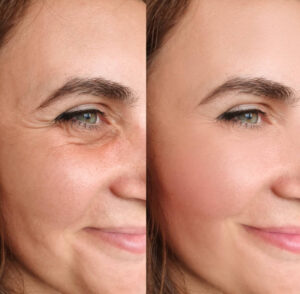
Fine Lines and Wrinkles: Especially around your eyes, mouth, and forehead. The laser stimulates collagen production, which naturally plumps and smooths these areas.
Uneven Skin Tone: Hyperpigmentation, melasma, and blotchy patches respond well to laser treatment. We can even out your complexion without harsh chemicals.
Enlarged Pores: While we can’t make pores disappear completely, laser resurfacing can minimize their appearance significantly.
Rough Skin Texture: That bumpy, uneven feel? The laser removes damaged surface cells and encourages fresh, smooth skin growth.
Surgical Scars: Older scars that have healed but left visible marks can be softened and blended with surrounding skin.
What it won’t do? It can’t stop the aging process entirely, and it’s not a substitute for good sun protection going forward. Results also vary based on your skin type, age, and how well you follow aftercare instructions.
Not all laser treatments are created equal. Here’s what we use at Manhattan Laser Spa and why:
Fractional CO2 Laser: This is the gold standard for dramatic results. It creates thousands of tiny treatment zones in your skin, leaving healthy tissue in between to speed healing. Great for deep wrinkles, significant sun damage, and stubborn scars. Expect about a week of downtime.
Erbium Laser Resurfacing: Gentler than CO2 but still effective. This works well for moderate skin concerns and typically involves less downtime—usually 3-5 days. It’s also safer for darker skin tones that might be at risk for pigmentation changes.
Non-Ablative Fractional Laser: The lightest touch option. This doesn’t remove surface skin but works underneath to boost collagen. Think of it as the “lunchtime laser”—minimal downtime but more gradual results. You’ll need several treatments spaced out over weeks.
IPL (Intense Pulsed Light): Technically not a laser, but we use it for pigmentation issues, redness, and broken capillaries. It’s especially good for sun damage without significant textural concerns.
Which one’s right for you? That depends on your skin type, the severity of your concerns, and how much downtime you can handle. We’ll walk through all these factors during your consultation.
Wondering what actually happens when you come in for laser skin resurfacing? Here’s the real rundown:
Initial Consultation: First, we analyze your skin type using the Fitzpatrick Scale to determine which treatments are safe for you. We discuss your concerns, medical history, and what you’re hoping to achieve. This isn’t a sales pitch—it’s about figuring out if laser resurfacing makes sense for your situation.
Pre-Treatment Prep: If we move forward, you might need to use specific skincare products for a few weeks before treatment. This could include medical-grade retinol or hydroquinone to prep your skin. We’ll also ask you to avoid sun exposure and certain medications that could interfere with healing.
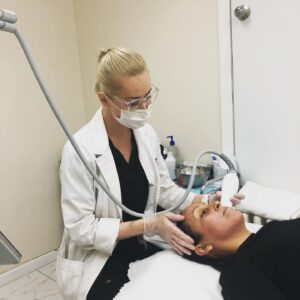
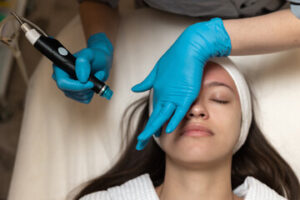
Treatment Day: We start by thoroughly cleansing your skin, then apply a topical anesthetic to keep you comfortable. The laser itself feels like warm pinpricks or tiny rubber bands snapping against your skin—not pleasant, but manageable. Most facial treatments take 30-60 minutes depending on the area covered.
Immediate Aftermath: Your skin will be red and feel like a moderate sunburn. We’ll apply healing ointments and give you detailed aftercare instructions before you leave.
Recovery Protocol: This is crucial. For the first few days, your skin will be red, swollen, and possibly oozing a bit. You’ll need to keep it moisturized with gentle cleansers and healing ointments, avoid sun exposure completely, and resist the urge to pick at peeling skin. Most people take 5-10 days off work for deeper treatments.
Follow-Up Appointments: We’ll check your healing progress and determine if additional sessions are needed. Many conditions require 2-4 treatments spaced several weeks apart for optimal results.
 Recovery and Downtime: The Truth
Let’s be honest about this part—recovery isn’t glamorous. Your skin will look worse before it looks better.
For ablative treatments (CO2 or erbium), plan on your face looking pretty rough for about a week. We’re talking red, swollen, crusty, and peeling. You won’t want to go to Aventura Mall or meet friends for drinks during this time. Most of our North Miami clients schedule treatments before a long weekend or time off work.
Days 1-3 are the most intense. Your skin will weep a bit, and you’ll need to apply healing ointments frequently. By day 4-5, the peeling starts. This lasts another 3-5 days. Around day 10, you’ll see pink, new skin underneath—sensitive but much improved.
For non-ablative treatments, recovery is much easier. You might have redness and slight swelling for 1-3 days, but you can usually wear makeup and go about your normal routine pretty quickly.
The key to good results? Following aftercare instructions religiously. Use the gentle cleansers and hydrating serums we recommend. Apply SPF protection every single day (this is Florida—sun protection isn’t optional). Avoid retinol products until we clear you to restart them. And don’t pick at peeling skin no matter how tempting it is.
Here’s what actually happens: initial results become visible once healing is complete, usually 2-3 weeks after treatment. But collagen remodeling continues for 3-6 months, meaning your skin keeps improving over time.
For most people, results last 1-3 years depending on skin type, lifestyle, and how well you protect your skin afterward. Sun damage is the biggest factor—if you’re outside without SPF regularly, results won’t last as long.
Many of our Sunny Isles Beach and Bal Harbour clients come back for maintenance treatments every 1-2 years to keep their results fresh. Others combine laser resurfacing with other treatments like chemical peels or medical-grade skincare for longer-lasting improvements.
This is a really important question, especially in diverse South Florida. The honest answer? Not all lasers are safe for all skin tones.
Darker skin types (Fitzpatrick IV-VI) have more melanin, which means higher risk of post-inflammatory hyperpigmentation or dark spots after laser treatment. Some lasers can actually make pigmentation worse instead of better.
That’s why the consultation phase is so important. We assess your skin type carefully and choose the right laser technology and settings for you. Erbium lasers and certain non-ablative options are generally safer for darker skin than traditional CO2 lasers.
If you have very dark skin, we might recommend alternative treatments or a more conservative laser approach with lower settings and multiple sessions. Safety always comes first—dramatic results don’t mean anything if your skin ends up damaged.
Some situations make laser resurfacing a bad idea:
You’re pregnant or breastfeeding. You have active acne breakouts or skin infections in the treatment area. You’ve taken Accutane within the last 6-12 months (this affects healing). You have certain autoimmune conditions or take medications that affect wound healing. You’re prone to keloid scarring. You can’t avoid sun exposure for several weeks after treatment.
During your consultation, we’ll go through your complete medical history and current medications to make sure laser resurfacing is safe for you.
 Why Choose Manhattan Laser Spa in North Miami?
You’ve got options for laser treatments throughout Miami-Dade County. Here’s why clients from Miami Gardens to Hollywood choose us:
Medical Supervision: We’re a medical spa, which means our treatments are performed under proper medical oversight. You’re getting clinical-grade results with appropriate safety protocols.
Experienced Team: Our laser technicians and medical staff have extensive training with different laser systems. We’re not using one-size-fits-all settings—we calibrate every treatment for your specific skin type and concerns.
FDA-Approved Technology: We invest in state-of-the-art, FDA-approved laser equipment because it works better and is safer than outdated systems.
Customized Treatment Plans: Cookie-cutter approaches don’t work well for laser resurfacing. We develop individualized plans based on your skin analysis, goals, and lifestyle.
Comprehensive Aftercare: We don’t just treat you and send you home. We provide detailed recovery instructions, check in during your healing process, and offer medical-grade skincare products to support your results.
Convenient Location: Easy to reach from Aventura, Miami Shores, and surrounding neighborhoods near Biscayne Boulevard.
Let’s talk money. Laser skin resurfacing isn’t cheap, but it’s an investment in results that actually last.
Pricing varies widely based on treatment type, area size, and how many sessions you need. A single fractional CO2 laser treatment for your full face typically runs $1,500-$3,500. Non-ablative treatments are generally less expensive but require more sessions.
We offer transparent pricing during consultations—no surprise fees or hidden costs. Many clients find flexible payment options helpful for spreading out the investment.
Is it worth it? That’s personal. If skin concerns are affecting your confidence or you’ve spent years trying products that don’t work, many people find the results life-changing. Others prefer to start with less expensive options and work up to laser treatments if needed.
Our North Miami location makes us easily accessible whether you’re coming from Miami Beach, Pembroke Pines, or anywhere in between. We’re close to FIU Biscayne Bay Campus and major routes through the area.
Clients regularly drive from Aventura, Hallandale Beach, and even up from South Beach because they trust our expertise and results. We understand South Florida skin—the sun damage, humidity effects, and diverse skin tones that make up our community.
