Skin tightening isn’t just for your face. Here’s where it works:
Face and jawline. Get rid of jowls, define your jawline, and lift sagging cheeks. Most people see significant improvement in facial contours after treatment.
Neck and chin. That loose skin under your chin (some people call it a turkey neck) responds really well to skin tightening. You’ll get a more defined chin and jawline without neck lift surgery.
Under eyes. Tighten crepey skin and reduce that hooded look around your eyes.
Forehead and brows. Lift drooping brows without Botox or surgery. This can even make your eyes look more open.
Décolletage. The chest area is one of the first places to show aging, especially if you’ve spent years in Fort Lauderdale’s sun. Skin tightening smooths out wrinkles and firms loose skin on your chest.
Arms. Those bat wings (loose skin on your upper arms) can be tightened without arm lift surgery. Results aren’t as dramatic as surgery, but you’ll see noticeable improvement.
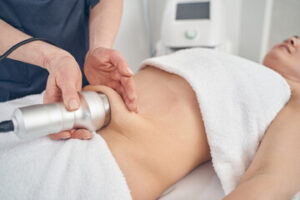
Abdomen. If you’ve had weight loss or pregnancy, skin tightening can firm loose belly skin. It won’t replace a tummy tuck for severe cases, but it works well for mild to moderate laxity.
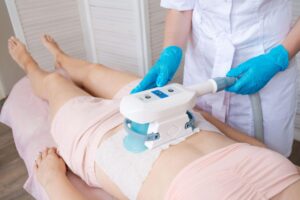
Thighs and knees. Inner thighs and the area above your knees respond well to treatment.

Ultherapy is the only FDA-cleared treatment that can lift skin on the neck, under the chin, and brow. It uses micro-focused ultrasound to heat tissue deep under your skin at the same level surgeons target during facelifts.
The device has ultrasound imaging built in, so your provider can actually see the layers of tissue they’re treating. This means precise energy delivery exactly where you need it.
Treatment takes 60 to 90 minutes for a full face and neck. You’ll feel tiny pulses of warmth as the ultrasound energy is delivered. Some people find it uncomfortable, but most tolerate it fine. We can use numbing cream or pain medication if needed.
Results show up gradually over 2 to 3 months as your body builds new collagen. Most people only need one treatment, though some do a touch-up after a year or two.
Thermage uses radiofrequency energy to heat the deeper layers of skin, stimulating collagen production. The device has a cooling system that protects your skin’s surface while heating the tissue underneath.
One of the best things about Thermage? You only need one session. Treatment takes 45 to 90 minutes depending on the area. You might notice some immediate tightening, but the real results appear over 2 to 6 months.
Results can last years with proper skincare and sun protection. Many people do maintenance treatments every couple of years.
Thermage works well on the face, neck, arms, abdomen, and thighs. It’s particularly good for smoothing wrinkles and tightening mild to moderate skin laxity.
This combines microneedling with radiofrequency energy. Tiny needles create micro-injuries in your skin while delivering RF energy deep into the tissue. This triggers a strong healing response and collagen production.
RF microneedling can treat deeper wrinkles, acne scars, and skin laxity all at once. It’s more aggressive than regular RF treatments, which means better results but also a few days of downtime.
You’ll need 3 to 4 sessions spaced about 4 weeks apart for best results. Your skin will be red and slightly swollen for a few days after each treatment, kind of like a mild sunburn.
Laser treatments use infrared light energy to heat the dermis and stimulate collagen. Often combined with RF for better results. Less downtime than ablative laser resurfacing, but still delivers noticeable tightening.
You’ll typically need 3 to 5 sessions for optimal results. Each session takes 30 to 40 minutes. There’s minimal downtime, just some redness for a few hours to a day.
Skin tightening works best if you have mild to moderate skin laxity. If you can pinch your skin and it takes a second to bounce back, you’re probably a good candidate.
Here’s what makes you ideal:
Who isn’t a good candidate?
If you have severe sagging, skin tightening treatments won’t give you the results you want. You’d be better off with surgical options like a facelift or neck lift. Be honest with yourself about your expectations.
You’re also not a candidate if:
During your free consultation, we’ll examine your skin and tell you honestly whether skin tightening will work for you or if you need a different approach.
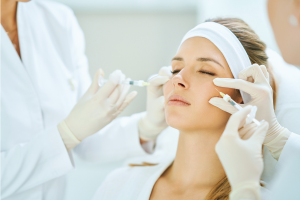
Here’s what happens when you come in for skin tightening:
Before treatment. We’ll clean your skin and take photos for comparison. Depending on the treatment type, we might apply numbing cream 30 to 60 minutes before starting.
For Ultherapy, we’ll apply ultrasound gel. For Thermage, we’ll draw a grid pattern on your skin to make sure we treat the area evenly.
During treatment. You’ll feel warmth and sometimes a tingling or prickling sensation as energy is delivered to your skin. It’s not excruciating, but it’s not exactly comfortable either. Most people say it’s tolerable.
The sensation varies by treatment type. Ultherapy tends to be the most uncomfortable because it goes so deep. Thermage has cooling built in, which helps. RF microneedling stings during the actual needling part, but numbing cream helps a lot.
Treatment time ranges from 30 minutes for small areas to 90 minutes for a full face and neck.
Right after. Your skin will be pink or red, like you’ve been out in the sun. You might have some mild swelling. This usually goes away within a few hours to a day or two.
One of the best things about skin tightening? Minimal downtime.
Ultherapy, Thermage, and standard RF treatments: You can go right back to normal activities. Some people get treatment during their lunch break and go back to work. Your skin might be red for a few hours. You might have some tenderness or mild swelling that lasts a day or two.
RF microneedling: Plan for 2 to 5 days of downtime. Your skin will be red and might feel rough or sandpapery as it heals. You’ll need to avoid makeup for 24 hours and stay out of the sun.
All treatments: No matter which type you get, skip the gym for 24 hours. Avoid hot showers, saunas, and anything that makes you sweat excessively for a day or two. And wear sunscreen religiously. Your skin will be more sensitive to sun damage after treatment.
This depends on which treatment you choose and how much tightening you need.
Ultherapy: Usually just one treatment. Some people do a maintenance session after 12 to 18 months.
Thermage: One treatment is typically enough. Results last 1 to 2 years or longer.
RF microneedling: 3 to 4 sessions spaced 4 weeks apart for best results.
Standard laser or RF treatments: 4 to 6 sessions, sometimes more depending on your skin laxity.
Your provider will create a treatment plan during your consultation based on your specific concerns and goals.
Here’s the thing about skin tightening. It’s not instant.
You might notice some immediate improvement right after treatment because the heat causes collagen fibers to contract. But the real magic happens over the next 2 to 6 months as your body produces new collagen.
Most people see gradual improvement starting around 4 to 6 weeks after treatment. Results continue to get better through month 3 or 4. Some people see continued improvement for up to 6 months.
This gradual timeline is actually a good thing. It means results look natural. No one will know you had “work done.” You’ll just look fresher and more rested.
Results typically last 1 to 2 years, sometimes longer with good skincare and sun protection. Many people do maintenance treatments to keep results looking their best.
When performed by trained professionals using FDA-cleared equipment, yes. Skin tightening has an excellent safety record.
Potential side effects:
This is why choosing the right provider matters. We’re a state-licensed medical spa with medical supervision. Our staff is trained in safe energy-based treatments. We use calibrated, well-maintained equipment and follow strict safety protocols.
We also assess your skin type before treatment. Darker skin tones have a higher risk of pigmentation changes with certain treatments, so we adjust our approach accordingly.
Fort Lauderdale has plenty of places offering skin tightening. Here’s what sets us apart:
Medical supervision. We operate under the oversight of a medical director. You’re not getting treated by someone who took a weekend course.
FDA-cleared technology. We use only medical-grade, FDA-cleared devices. No knockoffs, no “medical grade inspired” equipment.
Honest assessments. If we don’t think skin tightening will work for you, we’ll tell you. We’d rather lose a sale than have an unhappy client with unrealistic expectations.
Customized treatment plans. Your face isn’t like anyone else’s. We create plans based on your specific degree of laxity, skin type, and goals.
Transparent pricing. We discuss costs upfront during your free consultation. No hidden fees or surprise charges.
Real results. We’ve performed thousands of skin tightening treatments on Fort Lauderdale residents dealing with the same sun damage and aging concerns you’re facing.
Living in Fort Lauderdale comes with some serious skin challenges. Year-round UV exposure accelerates collagen breakdown. Humidity can stress your skin. Salt air adds to the damage.
If you’ve spent decades in South Florida, your skin has probably aged faster than someone living in a cooler climate. All that sun exposure breaks down collagen and elastin, leading to sagging and wrinkles.
Skin tightening helps reverse some of that damage by stimulating fresh collagen production. You’re essentially helping your skin rebuild what the sun has broken down.
Plus, the Fort Lauderdale lifestyle means you want to look good year-round. There’s no hiding loose skin under turtlenecks here. Skin tightening gives you the confidence to wear whatever you want, whether you’re at Las Olas, Fort Lauderdale Beach, or out on your boat.
Wondering how skin tightening compares to surgery?
Surgery (facelift, neck lift):
Non-surgical skin tightening:
The right choice depends on how much sagging you have and your goals. If you have severe jowls and lots of loose neck skin, surgery will give you better results. If you’re in the early stages of sagging, skin tightening can help you avoid or delay surgery for years.
Many people start with non-surgical options and move to surgery later if needed. There’s no reason to jump straight to surgery if you can get good results without it.
Prices vary based on treatment type and how many areas you’re treating.
General price ranges:
Ultherapy tends to be on the higher end because it only requires one treatment. RF microneedling costs less per session but you need multiple sessions, so total cost ends up similar.
We offer financing through CareCredit and Alphaeon Credit to make treatments more affordable. During your free consultation, we’ll give you an exact quote based on your treatment plan.
About 2 weeks before:
Day of treatment:
First 24 hours:
First week:
Long-term:
The better you take care of your skin after treatment, the longer your results will last.
Sound too good to be true? Let’s address some common concerns.
“I’ve heard skin tightening doesn’t really work.”
It works, but you need realistic expectations. If you’re expecting surgical facelift results without surgery, you’ll be disappointed. If you understand that skin tightening provides moderate improvement for mild to moderate laxity, you’ll be happy with your results.
“I live in Fort Lauderdale. Can I still go to the beach after treatment?”
Not immediately. You’ll need to stay out of direct sun for at least a week, sometimes longer depending on the treatment. Plan your appointment timing accordingly. Fall and winter are better times for skin tightening here since it’s easier to avoid sun exposure.
“Will it hurt?”
There’s some discomfort, but it’s tolerable for most people. Ultherapy is probably the most uncomfortable because it penetrates so deep. We can use numbing cream and pain medication to help. The actual treatment only takes 30 to 90 minutes, so even if it’s uncomfortable, it’s over quickly.
“How long do results last?”
Typically 1 to 2 years, sometimes longer. Your results depend partly on how well you take care of your skin afterward. If you keep smoking, tanning, and skipping sunscreen, results won’t last as long.
