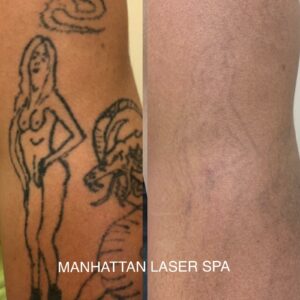
Not all tattoos are created equal. Some come off easily in 4-6 sessions. Others take 10-15 sessions. Here’s why:
Ink color makes a huge difference. Black and dark blue ink respond best because they absorb all wavelengths of laser light. Red, orange, and yellow inks are moderate. Green, light blue, and purple are stubborn and need specific wavelengths. White ink is nearly impossible to remove and sometimes darkens when treated (yes, that’s frustrating).
Professional vs amateur matters. Professional tattoos use higher quality ink applied deeper and more evenly. They actually take longer to remove than amateur stick-and-poke tattoos, which use less ink applied unevenly at shallower depths.
Older tattoos fade faster. Your body has been working on breaking down that ink for years. A 10-year-old tattoo typically removes in fewer sessions than a 1-year-old tattoo because there’s already some natural fading.
Location on your body counts. Tattoos closer to your heart remove faster because blood circulation is better. Ankle, foot, and hand tattoos take longer because circulation is weaker there. Your body can’t flush out the ink fragments as efficiently.
Your immune system and lifestyle play a role. Healthy immune systems clear ink faster. People who smoke, drink heavily, or have compromised immune systems see slower results. Staying hydrated and maintaining good health speeds up the process.
Ink density and layering. Heavy black fill-ins or tattoos with multiple layers (like cover-ups) take longer because there’s simply more ink to break down. Light shading removes quickly, sometimes in just 3-4 sessions.
Free Consultation
We start with a consultation to examine your tattoo and discuss your goals. Are you looking for complete removal or just fading it enough for a cover-up? We’ll assess the size, colors, age, and location of your tattoo, then give you a realistic estimate of how many sessions you’ll need.
We’ll also photograph your tattoo to track progress. Honestly, you won’t notice much change session to session, but when you compare photos from your first session to your fifth, the difference is obvious.
Before Your First Session
Avoid sun exposure for 4 weeks before treatment. This is critical in Dania Beach. Tanned or sunburned skin can’t be safely treated because the laser might target the melanin in your skin instead of the ink. That increases your risk of burns and pigmentation changes.
Stop taking blood thinners like aspirin or ibuprofen a few days before treatment. They increase bruising and bleeding.
Come with realistic expectations. This is a gradual process. You won’t walk out after one session with a gone tattoo.
During Treatment
Most sessions take 15-45 minutes depending on the size of your tattoo. We’ll apply numbing cream about 30 minutes before treatment to reduce discomfort. Some people skip the numbing and tough it out. Your call.
You’ll wear protective eyewear while we treat your tattoo. The laser makes a snapping sound with each pulse, and you’ll feel a sharp stinging sensation. People describe it as a rubber band snap or grease splatter. It hurts. Not going to lie about that. But it’s quick, and most people handle it fine.
You might smell something weird during treatment. That’s normal. It’s just a reaction between the laser and ink.
Immediately after treatment, you’ll see white “frosting” on your skin. This is carbon dioxide gas being released as the ink heats up. It disappears in a few minutes. The area will be red and swollen, like a bad sunburn.
After Treatment
Your treated area will be sore, swollen, and red for 1-3 days. Ice helps. So does over-the-counter pain medication.
Blistering is common and actually a good sign that your body is healing properly. Don’t pop the blisters. Let them heal naturally. They usually appear within 24 hours and resolve in a week.
Some people develop scabs or crusting. This is normal. Do not pick at them. Let them fall off on their own. Picking increases your risk of scarring.
Keep the area clean and dry for the first 24 hours. After that, gentle washing is fine. Apply the healing ointment we give you and keep the area bandaged initially.
Avoid the pool, ocean, hot tubs, and intense exercise for a few days. Sweat and chemicals can irritate your healing skin. In Dania Beach, that means planning your treatments around beach trips.
The treated ink will start shedding about 2-3 weeks after your session. You’ll notice the tattoo looks lighter. This fading continues for 6-8 weeks, which is why we space sessions that far apart.
Tattoo removal hurts. It typically hurts more than getting the tattoo in the first place. People who say otherwise are either very pain-tolerant or not being honest with you.
The pain level depends on location. Areas with thin skin and lots of nerves hurt more. Ribs, feet, hands, neck, and spine are the worst. Arms, legs, chest, and back are more tolerable.
The good news? Each session gets less painful as there’s less ink to treat. By your fifth or sixth session, it’s noticeably easier.
We use topical anesthetic cream that helps significantly. Some people also take ibuprofen before their appointment. The actual laser treatment is quick. Even large tattoos are done in under an hour. You can handle a few minutes of discomfort for results that last.
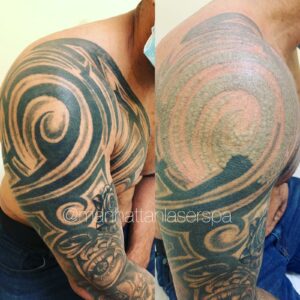
Most tattoos require 6-12 sessions for complete removal. Some factors that influence this:
Small, single-color tattoos: 4-6 sessions Medium, multi-color tattoos: 8-10 sessions
Large, dense, or multi-layered tattoos: 10-15+ sessions Amateur/stick-and-poke tattoos: 3-6 sessions Cover-up tattoos: 12-20 sessions (because there are multiple layers of ink)
Fading a tattoo for a new cover-up design usually takes 3-5 sessions. You don’t need complete removal, just enough lightening that a new artist can work over it.
We space treatments 6-8 weeks apart initially. Later sessions might be spaced 10-12 weeks apart as your body works through stubborn remaining ink. Rushing the process doesn’t work. Your body needs time to eliminate the fragmented ink.
This is a marathon, not a sprint. Complete removal typically takes 1-2 years. Sometimes longer for difficult tattoos. Sometimes faster for easy ones.
After 1-2 sessions: You’ll see some fading, maybe 20-30% lighter.
After 4-6 sessions: Noticeable improvement, around 50-70% faded.
After 8-10 sessions: Significant fading or near-complete removal for easier tattoos.
After 12+ sessions: Most tattoos are completely gone or so faded they’re barely visible.
Some tattoos leave a “ghost” image. This is a faint shadow where the tattoo was. It’s not ink, it’s just slight texture differences in your skin from years of having ink there. It’s usually not noticeable unless you’re looking for it.
This is huge for Dania Beach residents. Sun exposure is your biggest enemy during tattoo removal.
You cannot treat tanned skin. If you’ve been at the beach or tanning, we need to wait until your tan fades. The laser targets pigment, and tanned skin has more pigment. Treating tanned skin increases your risk of burns and hypopigmentation (permanent light spots).
After treatment, treated skin is extra sensitive to UV damage. You must avoid sun exposure for 2-4 weeks after each session. Use SPF 50+ if you have to be outside. Better yet, keep the area covered.
Plan your treatments during times when you’re not going to be at the beach constantly. Fall and winter are easier, but we treat people year-round. You just need to be serious about sun protection.
Most people heal without scarring if they follow aftercare instructions. But scarring is possible, especially if you pick at scabs or develop infections.
Common side effects (temporary):
Less common side effects:
Infection is rare but possible if you don’t keep the area clean. Signs include increased pain, spreading redness, pus, or fever. Call us immediately if you suspect infection.

We see all kinds of reasons. No judgment here. Common ones include:
Name of an ex. This is probably our number one reason. Relationships end. Those names stick around.
Career concerns. Some jobs have appearance policies. Visible neck, hand, or face tattoos can be deal-breakers in certain professions.
Youthful decisions. What seemed cool at 18 doesn’t always fit at 35. Your taste evolves.
Poorly executed tattoos. Amateur tattoos, misspellings, designs that didn’t turn out right.
Symbols that changed meaning. You got a symbol thinking it meant one thing, found out it means something else entirely.
Cover-up preparation. You want a better tattoo in that spot.
Life changes. Tattoos commemorating groups, phases, or beliefs you’ve moved past.
Tattoo removal pricing varies by tattoo size and complexity. We’re upfront about costs because you deserve to know what you’re getting into.
Small tattoos (under 2 inches): $75-150 per session Medium tattoos (2-6 inches): $150-300 per session Large tattoos (6-12 inches): $300-500 per session Extra large (sleeves, back pieces): $500-800+ per session
Most people buy packages of 6-10 sessions at a discounted rate. Total cost for removing a medium-sized tattoo typically runs $1,500-3,000. Large tattoos can be $4,000-8,000 for complete removal.
Yes, it’s expensive. But think about how much you paid for the tattoo in the first place, and how long you’ve been unhappy with it. Removal is an investment in feeling comfortable in your skin again.
We offer financing options to make treatment more accessible. During your consultation, we’ll give you a detailed price quote.

Manhattan Laser Spa is conveniently located to serve residents throughout Dania Beach and the surrounding communities. Whether you’re coming from the Marina District, Dania Pointe, Harbour Inlet, or anywhere along US-1, we’re easy to reach.
We also welcome clients from Hollywood, Fort Lauderdale, Hallandale Beach, and throughout Broward County. If you’re near Fort Lauderdale-Hollywood International Airport or anywhere in South Florida, we can help.
We specialize in laser treatments. This isn’t a sideline service for us. It’s what we focus on.
Our practitioners are trained in laser safety and tattoo removal techniques. We know how to adjust settings for different skin types and ink colors to get results safely.
We use FDA-cleared, medical-grade laser systems. Both Q-switched and picosecond technology. Not outdated equipment or budget systems.
We’re honest about expectations. If your tattoo is going to be difficult to remove, we’ll tell you upfront. We’d rather set realistic expectations than overpromise.
We understand the emotional side of tattoo removal. This isn’t just about removing ink. It’s about moving past something that no longer serves you. We respect that.
