Laser Hair Removal for Dark Skin Tones in Miami: The Wavelength Question Nobody Asks You
Before you ask what a session costs, ask what wavelength the machine runs. That question tells you more about whether you’ll get clean results or a burn than anything on the price list — and almost nobody asks it before they book.
In Miami especially, you’ll see clinics offering laser hair removal at $19 a session or “unlimited packages” for a few hundred dollars. Every clinic will tell you they use “the latest laser.” What they don’t volunteer is which laser, at which wavelength, and whether anyone looked at your skin before turning it on. For lighter skin tones, that gap is annoying but rarely dangerous. For Fitzpatrick IV through VI — medium-deep to deeply pigmented skin — it’s the difference between clean results and burns.
Fitzpatrick I Through VI, in Plain Terms
The Fitzpatrick scale classifies skin into six types based on how it responds to UV exposure — from Type I, which always burns and never tans, to Type VI, which is deeply pigmented and rarely burns. It was built for sunburn risk, but in laser work it does double duty: it tells you how much melanin is sitting in the epidermis itself, which matters once you’re firing a laser at someone’s skin.
That’s the part that gets skipped at intake-desk-only clinics. The answer determines which wavelength should be used and what settings are safe. Skip that assessment, and the operator has no way of knowing whether the setting they’re about to use will treat your hair follicle or damage your skin.
Why a Single-Wavelength Laser Is a Problem on Darker Skin
A lot of the cheaper, older machines running around Miami use only a 755nm Alexandrite laser. On lighter skin, that’s fine. The problem is what 755nm does once it hits deeper Fitzpatrick types: it doesn’t just get absorbed by the melanin in the hair follicle, which is the target. It also gets absorbed by the melanin sitting in the skin itself.
The laser can’t tell the difference between pigment in the follicle it’s supposed to hit and pigment in the epidermis it’s supposed to leave alone. On Fitzpatrick I through III, there isn’t enough competing melanin in the skin for this to matter much. On Fitzpatrick IV, V, and VI, there’s plenty — and that raises real risk of burns. A clinic running one wavelength on every client is running the same setting on a Fitzpatrick II client and a Fitzpatrick VI client.
That’s the tell.
What the Dual-Wavelength Setup Actually Does
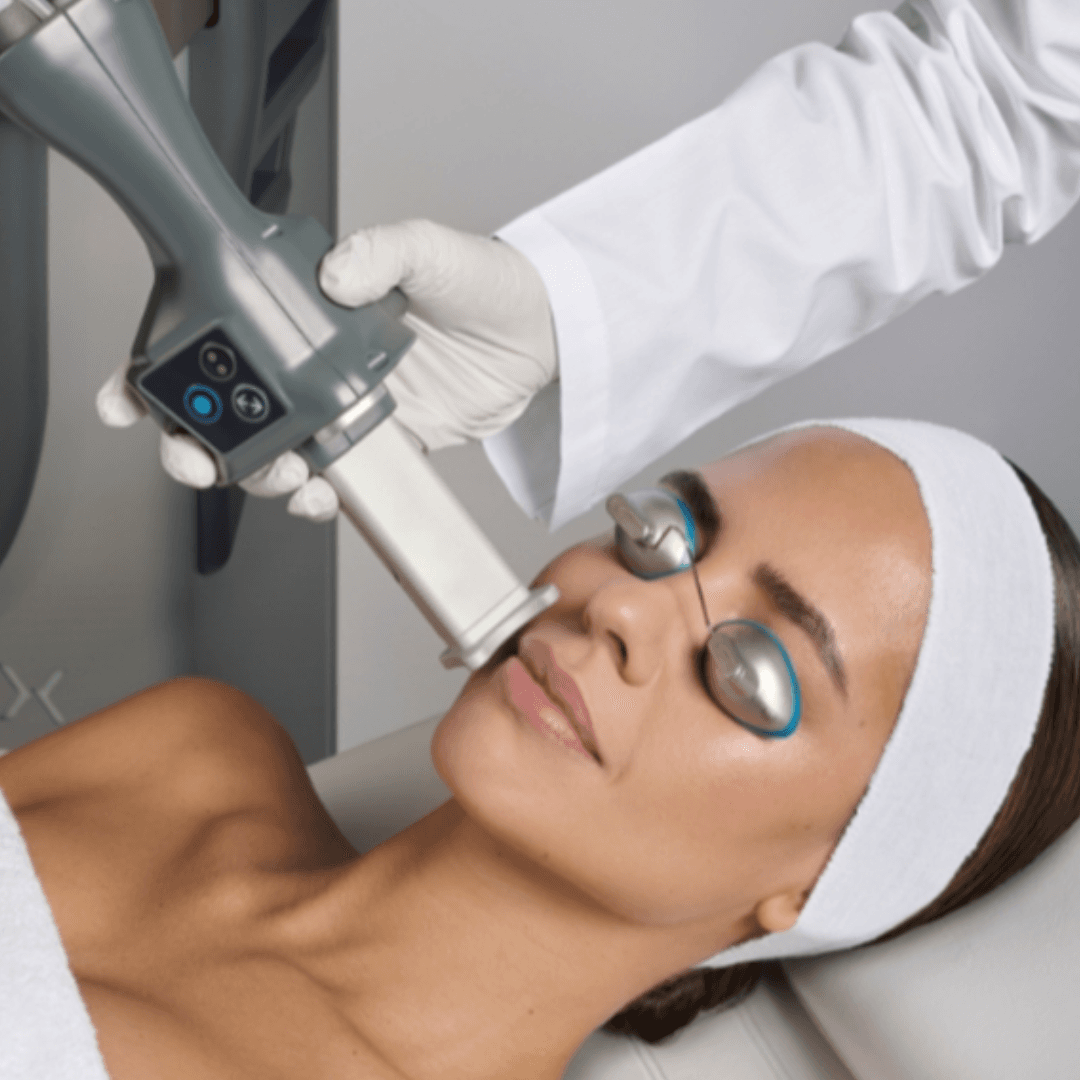
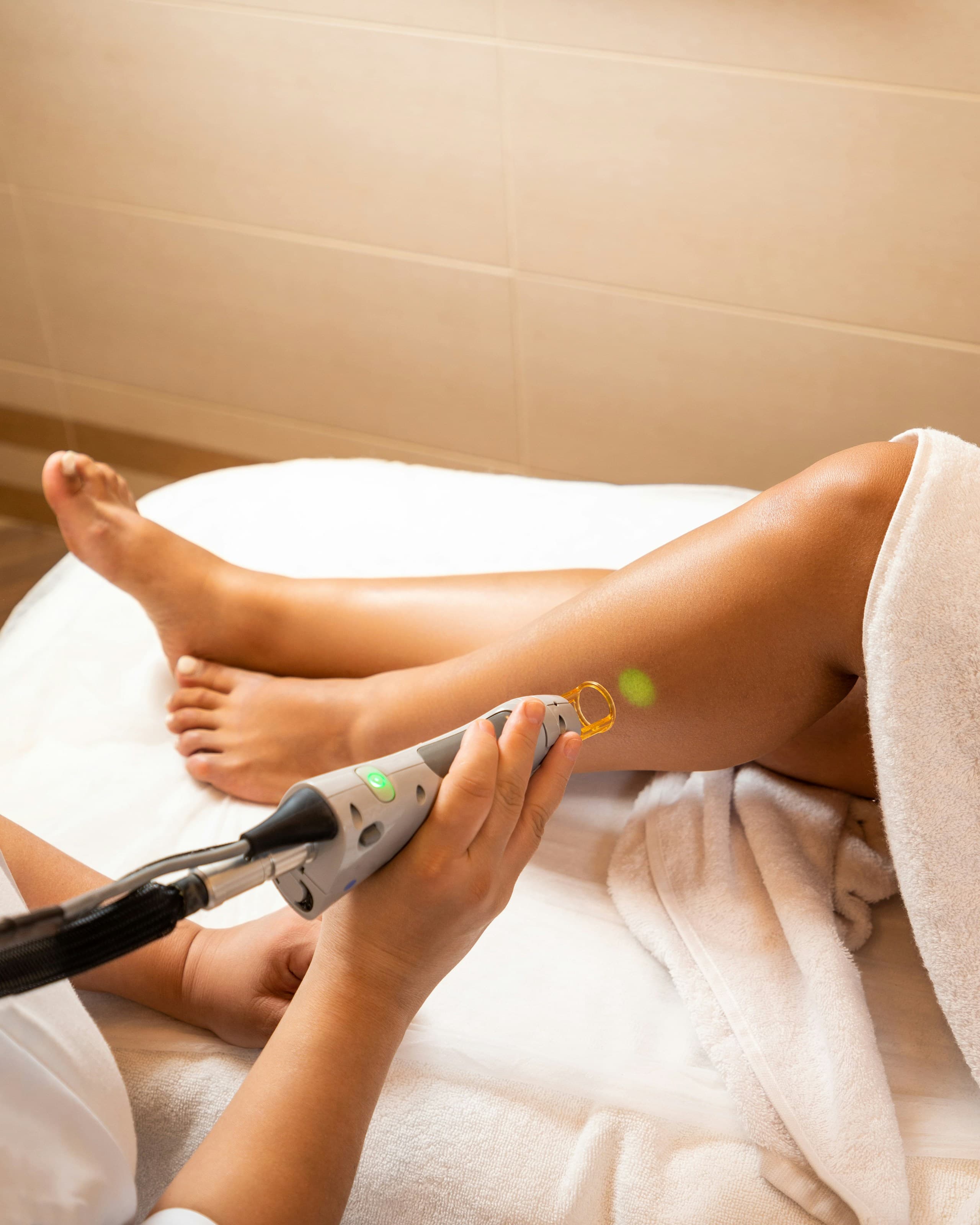
We use the Candela GentleMax Pro, which pairs that same 755nm Alexandrite laser with a 1064nm Nd:YAG laser in one machine. The point isn’t that Nd:YAG is simply “the good one.” It’s that the two wavelengths do different jobs, and having both means the operator can match the wavelength to the skin instead of running one setting on everyone.
The 1064nm Nd:YAG penetrates deeper and bypasses more of the superficial melanin sitting in the epidermis, which is what makes it viable on deeper skin tones where 755nm alone would raise burn risk. The GentleMax Pro also has a built-in cooling system that fires cold air before, during, and after each pulse, protecting the skin surface while the laser energy does its work underneath.
That combination is why the device is rated to treat Fitzpatrick I through VI. A single-wavelength machine doesn’t have the second tool available when a darker skin tone calls for it.
The Free Consultation Is the Safeguard
We do a free consultation and Fitzpatrick skin-type assessment before anyone’s first session. Candidacy and machine settings get determined at that in-person visit — someone looks at your skin and your hair, and decides what wavelength and fluence make sense for you specifically.
A clinic advertising a $19 session with no discussion of your skin type isn’t offering you a deal. A $19 session tells you what machine they’re running and how little judgment is going into the setting.
What to Actually Expect: Sessions, Timeline, Results
Most areas run 6 to 8 sessions spaced 4 to 8 weeks apart. Face and bikini areas tend to need more — usually 8 to 10 sessions.
The honest answer on results: 85–95% permanent reduction with maintenance touch-ups. Not 100%. Nobody legitimate should promise permanent, complete removal in three visits, on any skin tone.
What This Actually Costs in Miami
Pricing here isn’t tiered by skin tone — the per-area and package prices are the same regardless of Fitzpatrick type. What can differ is how many sessions you actually need.
Here’s the actual math on a few common areas. Lip, chin, sideburns, hairline, and jawline run $149 per session. Underarms and bikini line run $189 per session. A 6-session package on medium areas — bikini line, lower legs, half arms — runs $499. Large areas, like full legs, full arms, Brazilian, or full back, run $599 for the same 6-session structure. Full body across 7 parts runs $2,499, and head-to-toe full body runs $2,999. We also offer financing through Affirm and Klarna if you want to spread a package out.
The One Question to Ask Before You Book
Wherever you end up going in Miami, ask two things before you hand over a deposit: what wavelength does the laser use, and will someone assess my Fitzpatrick skin type before my first session. If a clinic can’t answer both clearly, that’s your answer.
Location
Manhattan Laser Spa — Sunny Isles Beach, FL