Sun Spots Aren't Melasma — Treating Them the Same Way Is a Mistake
Search “sun spot removal Miami” and “age spot removal Miami” and you’ll land on pages that use those terms interchangeably with “melasma” and “dark spot removal” — sometimes in the same sentence. That’s a problem, because we already tell melasma clients exactly what their treatment looks like: 3–6 PicoWay sessions spaced 4–6 weeks apart, paired with sun protection and prescription topicals, with maintenance every 6–12 months after that. It’s a real protocol built around a real condition.
A sun spot is not that condition. Same brown mark, different cause, different plan.
What Actually Causes Each One
A sun spot comes from cumulative UV exposure — years of sun hitting the same patch of skin until pigment builds up there. It’s a single, stable event once it forms.
Melasma is driven by hormones and heat, which is why it shows up during pregnancy, with birth control, and after sun, saunas, hot yoga, or standing over a stove. It tends to be symmetrical, and it comes back if the trigger doesn’t stop. Our melasma protocol includes ongoing maintenance sessions and daily sun protection as permanent parts of the plan for that reason — melasma isn’t something we clear once and walk away from.
Why Borrowing the Melasma Protocol Backfires
Melasma flares from heat-based devices because heat stimulates melanocytes that are already hormonally primed to overreact, and the pigment comes back — often darker than before. That’s rebound hyperpigmentation, and it’s the single biggest risk in melasma treatment.
A sun spot doesn’t carry that hormonal trigger. But that doesn’t mean the two get treated identically by default — it means each one gets its own assessment before we decide what to do with it.
Pressure, Not Heat
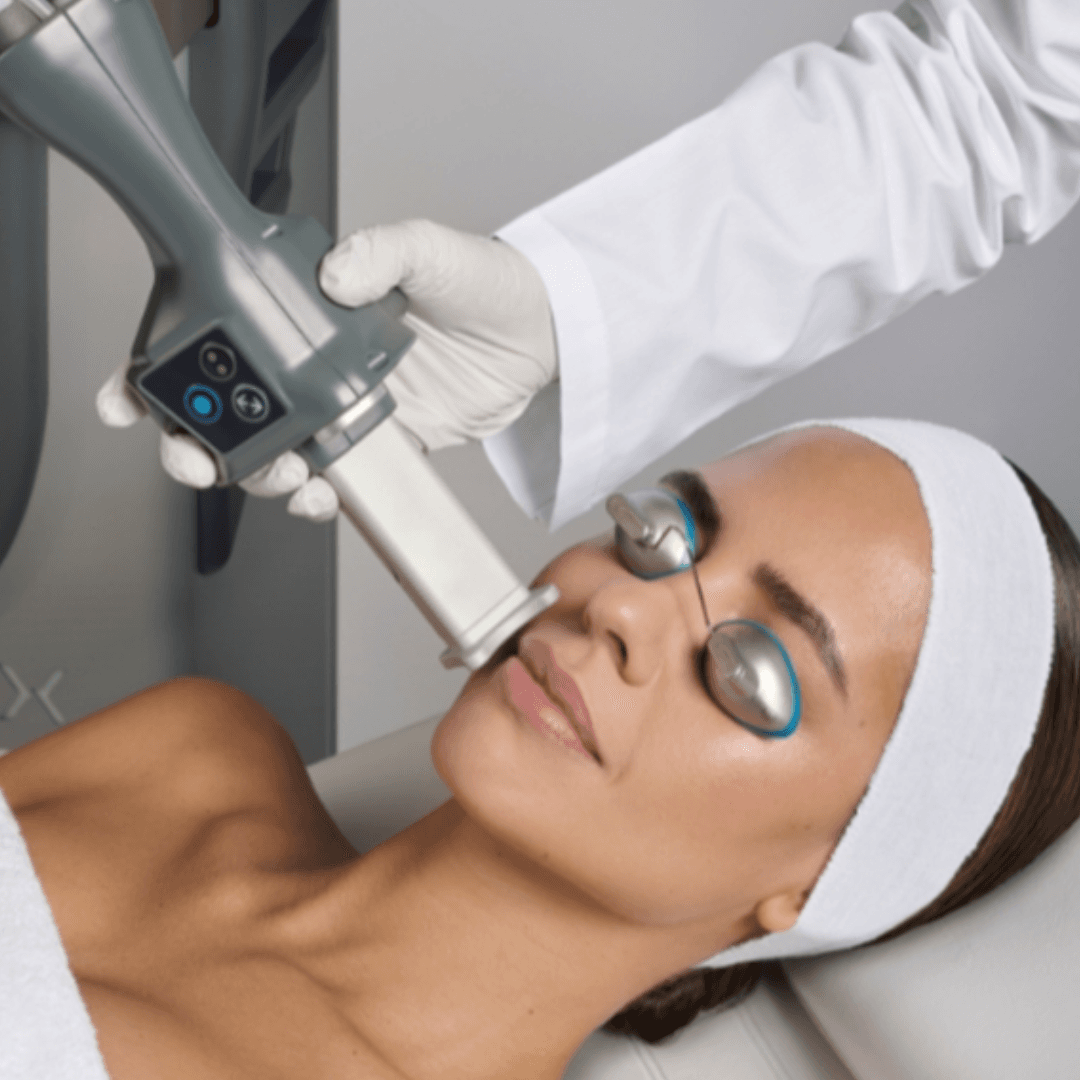
We use the Candela PicoWay for both conditions, and the reason it works comes down to how it delivers energy. PicoWay runs three wavelengths — 532nm, 785nm, and 1064nm — in picosecond pulses short enough that the laser shatters pigment with a mechanical pressure wave instead of heating the tissue around it.
That mechanism is why PicoWay is safe across Fitzpatrick I through VI. Heat-based lasers carry a real risk of burning the skin around a target spot on darker tones instead of just breaking up the pigment. PicoWay fractures the melanin into particles small enough for the body to clear on its own. On Fitzpatrick V or VI skin, that’s the difference between clean fading and a burn that leaves its own mark behind.
We Won’t Invent a Session Count
We don’t have a published session count for sun spots the way we do for melasma’s 3–6 sessions. What decides it is the depth and age of the pigment — which is exactly what the free consultation and Fitzpatrick assessment are for.
The IPL Warning Still Applies
We’ve said it before about melasma: if a clinic offers you IPL, book somewhere else. That caution isn’t specific to melasma. IPL relies on heat, and in darker Fitzpatrick skin tones, the energy needed to break up a dark spot can get absorbed by the surrounding skin instead — causing burning or rebound hyperpigmentation. The device matters even when the condition in front of you isn’t melasma.
Telling Them Apart Before Anything Gets Treated
This isn’t a self-diagnosis situation. A free consultation and a Fitzpatrick skin-type assessment — done in person, not guessed at from a photo — is what separates a sun spot from melasma from something else entirely, and it’s what decides the protocol and the realistic session count.
Fading, Not Erasing
We won’t tell you a sun spot disappears completely in every case. That depends on how deep and how old the pigment is. What we can tell you is that treated pigment fades, often significantly, and that outcome holds up better the sooner you treat it.
Prevention after that is in your control. Daily mineral or tinted SPF 50+ — the same sun protection built into our melasma protocol — is what keeps new UV-driven spots from forming elsewhere on your skin.
What This Costs
We haven’t published a flat sun-spot price, because it depends on the assessment. What we can tell you is how we price everything else: per session, in transparent packages, with no upsells and no “unlimited plan” pitch tacked on afterward. That’s the same approach behind our melasma and pigmentation pricing and our tattoo removal pricing — real numbers, not a “call for pricing” runaround. If you want an actual quote for your spot, the free consultation is where that number comes from. You can see the full range of what we treat on our services page.
Location
Manhattan Laser Spa — Sunny Isles Beach, FL