Your Filler Looks Uneven After 3 Days — Here's Why
No, your face isn’t ruined. If you got filler three days ago and one side looks a little puffier, a little firmer, or slightly higher than the other, that’s not a bad outcome — that’s just where you are in the timeline. Swelling, slight asymmetry, and firmness in the first few days after filler are normal and expected. They come from fluid shifts and injection trauma, not necessarily from where the product was actually placed. Your face is reacting to needles and cannula passes, not just showing you the final shape of the filler underneath.
This is also exactly why we schedule a 2-week follow-up check-in before anyone — including us — tries to judge the final result. Day 3 is not the finish line. It’s the part of the process where people panic, and panic is what leads to decisions that are hard to undo.
What’s actually happening under the skin in those first 72 hours
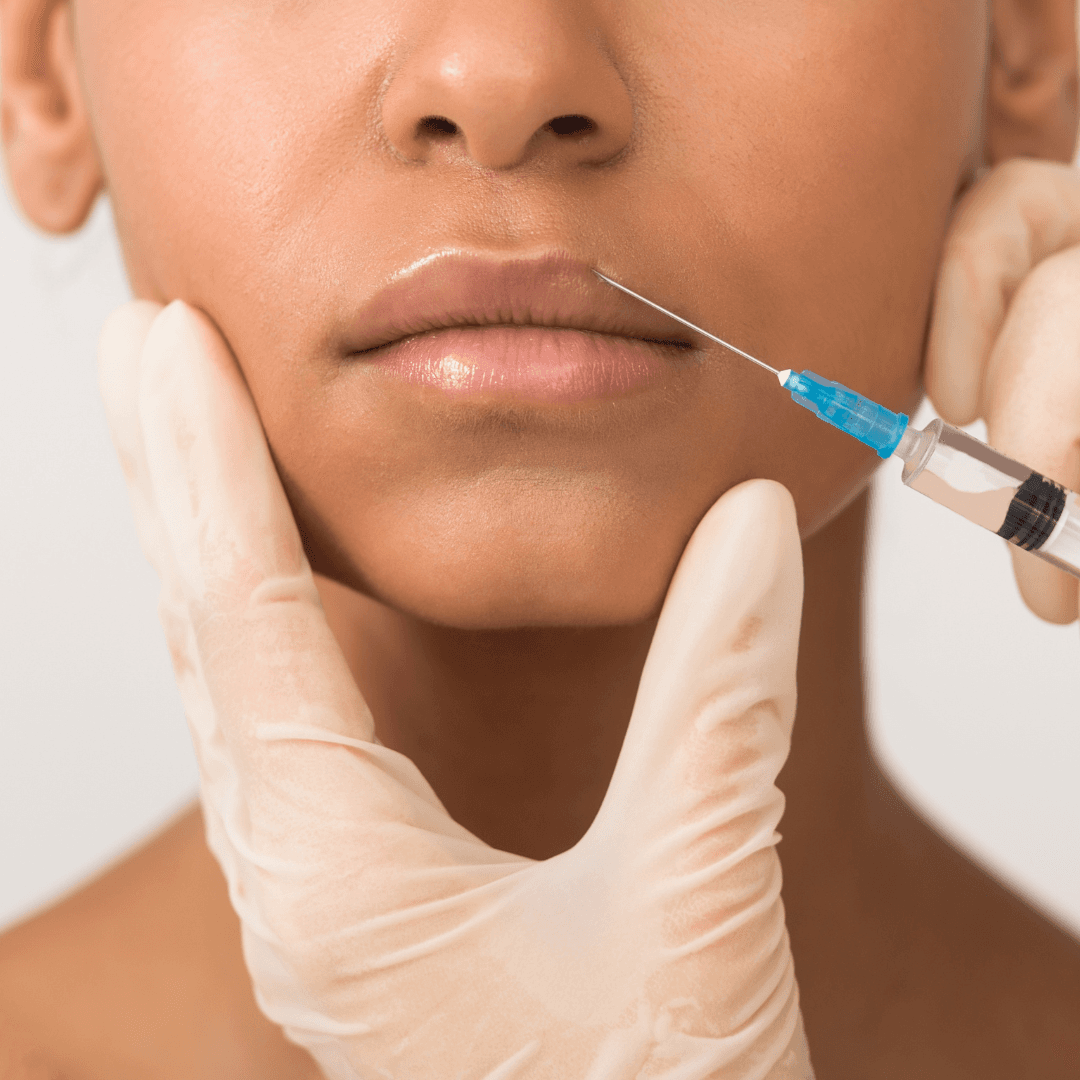
When a needle or cannula passes through tissue, the body responds the way it responds to any small trauma: fluid moves into the area, vessels dilate, and the tissue swells. That swelling sits on top of the filler itself, which means what you’re looking at in the mirror on day 2 is a mix of actual product and your body’s inflammatory response to getting there. The puffiness you see is not necessarily sitting exactly where the filler was placed — it’s often broader and more diffuse than the injection points themselves, which is part of why one cheek can look rounder than the other even when the same amount of product went into each side.
Healing speed varies person to person. Hydration, skin thickness, how much bruising occurred, even how much salt you ate the night before — all of it affects how fast the swelling resolves. There’s no single guaranteed timeline that applies to everyone, which is exactly why we don’t make early-day judgments part of the process at all.
Why we don’t call it final until the 2-week mark
We offer a 2-week follow-up check-in as a standard part of the filler service — not as an upsell, not as a reason to book another appointment, just as the point where we can actually look at what you have. By two weeks, the fluid-shift swelling from the injections has had time to resolve and the filler has had time to settle into the surrounding tissue rather than sit on top of it. That’s the version of your face the filler actually produced.
Here’s the honest answer to the question almost everyone asks at day 3: the uneven, puffy, slightly-too-much look you’re seeing right now almost always resolves on its own by the 2-week mark and doesn’t need any correction at all. Not a touch-up. Not more product. Just time. We’d rather tell you that upfront and have you wait two weeks than take your money for an adjustment you didn’t need.
The mistake: getting a touch-up before you’ve actually healed
Here’s the trap, and it’s a common one. Someone looks in the mirror at day 4 or day 5, still swollen, still slightly asymmetric, and decides the filler “isn’t enough” or “looks wrong.” So they go back in for more product before the original filler has settled.
The problem is that you’re now adding volume to tissue that’s still working through its own healing process. When the original swelling finally goes down and the added product settles alongside it, you’re left with more total volume than anyone intended — and more than you’d have chosen if you’d seen the real, settled result first. This is exactly the kind of upsell we don’t do. No “let’s add a little more while you’re here.” We’d rather have you come back frustrated at day 14 with an honest problem than overfilled at day 14 because we said yes to something at day 5.
If it still looks off at 2 weeks, that’s usually not swelling anymore — that’s technique
If two weeks have passed and something genuinely still looks uneven, that’s no longer a timing problem. That’s a technique problem, and it deserves an honest conversation instead of more waiting.
Overfilling is the number-one reason filler looks bad long-term — not the brand of product, not the area treated, but how much went in and how carefully it was placed. Restraint from the injector matters more than volume. Two injectors using the exact same syringe of the exact same product can produce completely different results on the same face, because the technique — depth, placement, how the product is distributed across the tissue — is what actually determines the outcome. The product is identical. The hands aren’t.
Florida law requires that filler be injected by a licensed medical professional — an MD, ARNP, PA, or RN under physician supervision. That requirement exists because this is a technique-dependent procedure, not a product you can standardize your way around.
What can actually be adjusted — and what can’t
If there’s a real problem at the 2-week mark, what can be done depends entirely on what was used. HA fillers — the Juvederm and Restylane families — can potentially be adjusted with hyaluronidase, administered by a licensed medical professional, if an actual issue remains after the swelling has fully resolved. It’s a legitimate option for a genuine correction, not a first response to early puffiness.
Non-HA fillers don’t work that way. Sculptra, Radiesse, and Bellafill can’t be dissolved the same way an HA filler can. That’s exactly why restraint during the original injection matters even more with these products — there’s no undo button waiting at the 2-week appointment. If something is off with a non-HA filler, the options are more limited, which is precisely the reason a careful, conservative approach at the time of injection is worth more than any correction afterward. This isn’t something to manage on your own — any concern needs an actual conversation with your provider.
The red flags that are not normal settling
Everything above describes normal, expected healing: puffiness, mild asymmetry, firmness that fades over roughly two weeks. That’s a different category entirely from the signs of a true vascular problem.
Significant pain — more than you’d expect from an injection — along with skin blanching (turning pale or white) or unusual color change, especially a dusky or mottled appearance, can signal a vascular occlusion, where filler has compressed or entered a blood vessel. This is not a wait-and-see situation. If you notice any of these signs, at any point after treatment, call your provider immediately. That’s the one part of this process where “give it two weeks” is the wrong answer.
Location
Manhattan Laser Spa — Sunny Isles Beach, FL