Is Laser Tattoo Removal Safe for Dark Skin? Ask About the Laser, Not the Skin Tone
Ask a clinic if they treat dark skin and every single one will say yes. That’s not a useful question anymore — it’s a formality everyone’s learned to answer correctly, the same way every clinic says they use “the latest laser.” The question that actually tells you something is: what device, and what wavelength?
If someone can’t name their laser, or they skip a Fitzpatrick assessment before booking you in, that’s the red flag — not your skin tone. Fitzpatrick I through VI is a real classification system, and it should drive an actual clinical decision about how your treatment is done, not just sit on a consent form you sign on your way to the chair. A clinic that treats “safe for dark skin” as a yes/no checkbox instead of a device-and-settings decision is telling you they haven’t thought past the sales pitch. That’s the differentiator. Not whether they’ll take your money — they will — but whether they can tell you why their equipment handles your skin tone safely.
Why older lasers carry a real risk on Fitzpatrick IV–VI skin
Here’s the mechanism, because it matters more than the reassurance. Q-switched lasers — the older nanosecond technology still running in a lot of clinics — rely more heavily on heat to break down tattoo ink. That heat doesn’t stay perfectly contained to the ink particles. It spreads into surrounding tissue, and in skin with more melanin, that heat can damage the melanocytes sitting next to the ink.
Damaged melanocytes don’t just heal back to normal. They either stop producing pigment in that spot, which shows up as a lighter patch than the surrounding skin, or they overproduce it, which shows up as a darker patch. In Fitzpatrick I–III skin, this risk is low. In Fitzpatrick IV–VI skin, it’s a real risk — not a rare fluke, not something limited to careless clinics. It’s a structural consequence of how heat-based lasers work on skin with more melanin to interact with. This is the honest answer, and it’s the reason the question of which laser matters so much more here than it does for a lighter-skinned client getting the same tattoo removed.
How PicoWay works differently — pressure, not heat
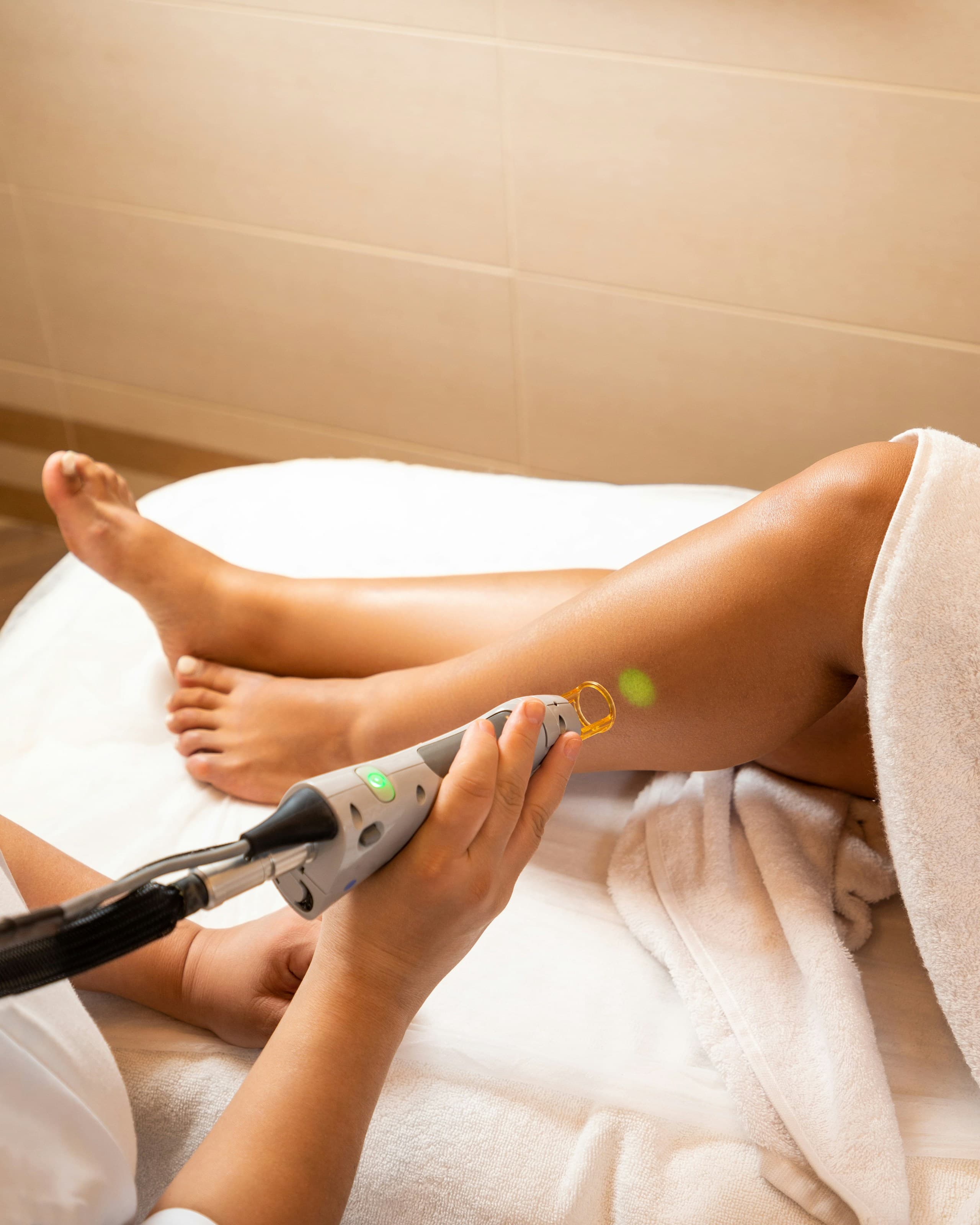
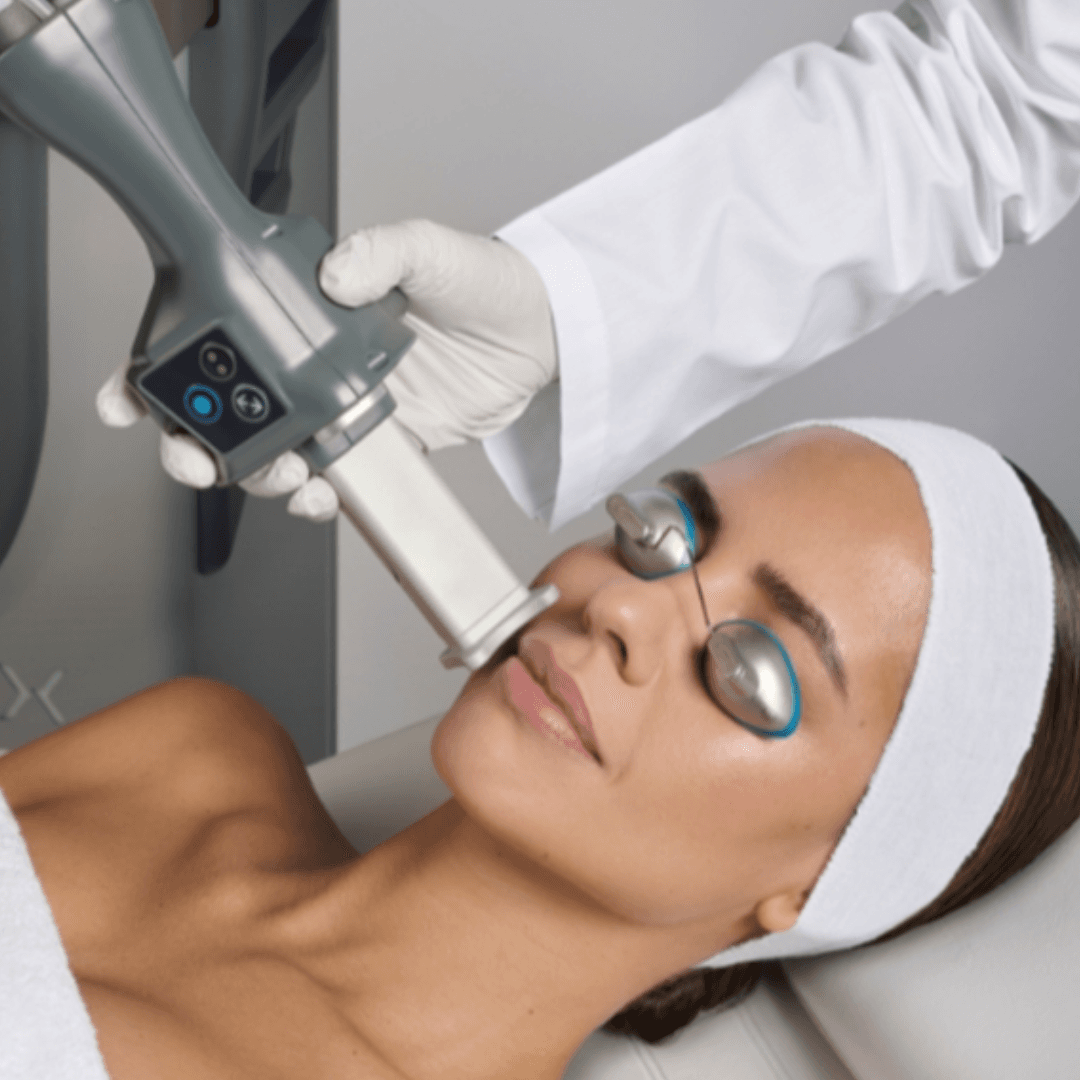
We use the Candela PicoWay, a picosecond laser, and the distinction isn’t marketing language — it’s the actual physics of how the ink gets broken up. Instead of relying primarily on heat to fragment pigment, PicoWay fires pulses measured in picoseconds — a fraction of the time a Q-switched laser uses — which shatters the ink through pressure waves instead of thermal damage. Think of it like a rubber-band snap: a fast, mechanical break rather than a slow burn. The energy hits, cracks the ink into smaller particles your body can clear, and moves on before heat has time to spread into the surrounding tissue and put melanocytes at risk.
That’s the actual reason PicoWay is used across Fitzpatrick I through VI, where older technology gets more cautious the darker the skin gets. It’s not that PicoWay ignores skin tone — it’s that the mechanism it uses doesn’t depend on heat soaking into skin the way older systems do, which gives it a wider margin of safety on skin that’s historically been harder to treat well.
Three wavelengths, because ink isn’t one color
PicoWay isn’t a single wavelength — it’s three: 532nm, 785nm, and 1064nm. That range exists because tattoo ink isn’t one color, and different colors absorb different wavelengths of light. A black tattoo and a pastel blue tattoo are not the same job. The three-wavelength setup is what lets a single device cover ink colors including blues, greens, and pastels, across Fitzpatrick I through VI, without switching to a different machine or telling a client with a colorful tattoo that they’re simply not a candidate.
This is exactly what a clinic should be able to explain if you ask them about their device — not a vague “we treat all colors,” but which wavelength handles which ink color, and why that combination was chosen. If a clinic can walk you through that without reaching for a brochure, they’ve actually thought about your case. If they can’t, they’re running on the same “yes, we treat dark skin” script as everyone else. Read more about how PicoWay works.
Why the consultation matters more here than anywhere else
Every client gets a free consultation and a Fitzpatrick skin-type assessment before the first session — not as a formality, but because the margin for error is smaller on darker skin tones. On Fitzpatrick I or II skin, a slightly aggressive setting is unlikely to cause lasting damage. On Fitzpatrick V or VI skin, the same misjudged setting is the difference between clean fading and a patch of hypopigmentation that takes months to resolve, if it resolves at all.
Safe tattoo removal for skin of color depends entirely on this step actually happening — not being skipped because the front desk wants to get you scheduled faster. If a clinic quotes you a price and a start date before ever looking closely at your skin and your ink, that’s the moment to ask more questions, not fewer.
How many sessions, honestly
Tattoo removal with PicoWay typically runs 5 to 12 sessions, spaced 6 to 8 weeks apart. That’s a real range, not a marketing number, and where you land in it depends on ink color, how old the tattoo is, and your skin tone. A black tattoo done recently on lighter skin tends to clear faster than a multicolor tattoo that’s been in the skin for fifteen years on darker skin. Does laser tattoo removal work on dark skin? Yes. But the timeline is individual, and anyone who gives you an exact number before assessing your tattoo and your skin is guessing, not diagnosing. See the full breakdown of the tattoo removal process.
What “removal” actually means
We won’t tell you a tattoo will disappear completely, because that’s not always true, regardless of which device does the work. Results vary by ink, by the age of the tattoo, and by skin tone. Some tattoos fade to a faint shadow that’s easy to cover or barely noticeable. Others clear almost entirely. There’s no guarantee of complete removal, and a clinic that promises one — on any skin tone, with any laser — is telling you what you want to hear, not what the ink and your skin will actually do.
The same device, same considerations, for permanent makeup
PicoWay is also what we use for permanent makeup removal — microblading, lip blush, eyeliner, brow tattoos — priced at $399 per session. The same wavelength and skin-tone considerations that apply to a tattoo on your arm apply to pigment implanted in your brows or lips. It’s still ink sitting in skin, still subject to the same heat-versus-pressure question, still safer to remove with a mechanism that doesn’t rely on heat spreading into surrounding tissue. Learn more about permanent makeup removal.
The honest bottom line
No upsells, no unlimited-package gimmicks, no promise that your tattoo will vanish in three visits because that sounds better on a Groupon. Before you book anywhere in Miami, ask about the device and the wavelength, not just whether they treat dark skin — because every clinic will say yes to that question, and only some of them can actually back it up. Tattoo removal for dark skin tones in Miami isn’t a zip code problem. It’s a hardware problem, and the clinic that can explain their hardware is the one worth trusting with it.
Location
Manhattan Laser Spa — Sunny Isles Beach, FL