PicoWay Laser Treatment: The Three Things It Actually Fixes (And What Each One Costs)
Ask five clinics what PicoWay does and you’ll get five versions of the same vague answer: “it’s a picosecond laser, it’s great for pigment, it’s better than the old lasers.” What almost nobody tells you is that PicoWay isn’t one treatment. It’s a platform — three wavelengths (532nm, 785nm, 1064nm) doing three genuinely different jobs depending on what you’re trying to fix. We use the Candela PicoWay for laser tattoo removal, for permanent makeup removal, and for melasma and pigmentation treatment, and those three protocols have almost nothing in common except the machine. Different session counts. Different combination treatments. One of them — melasma — has a wrong answer that other clinics will still sell you. Before any of it starts, we run a free consultation and a Fitzpatrick skin-type assessment. Here’s how the three actually break down.
What “Picosecond” Actually Means — and Why It Beats Older Q-Switched Lasers
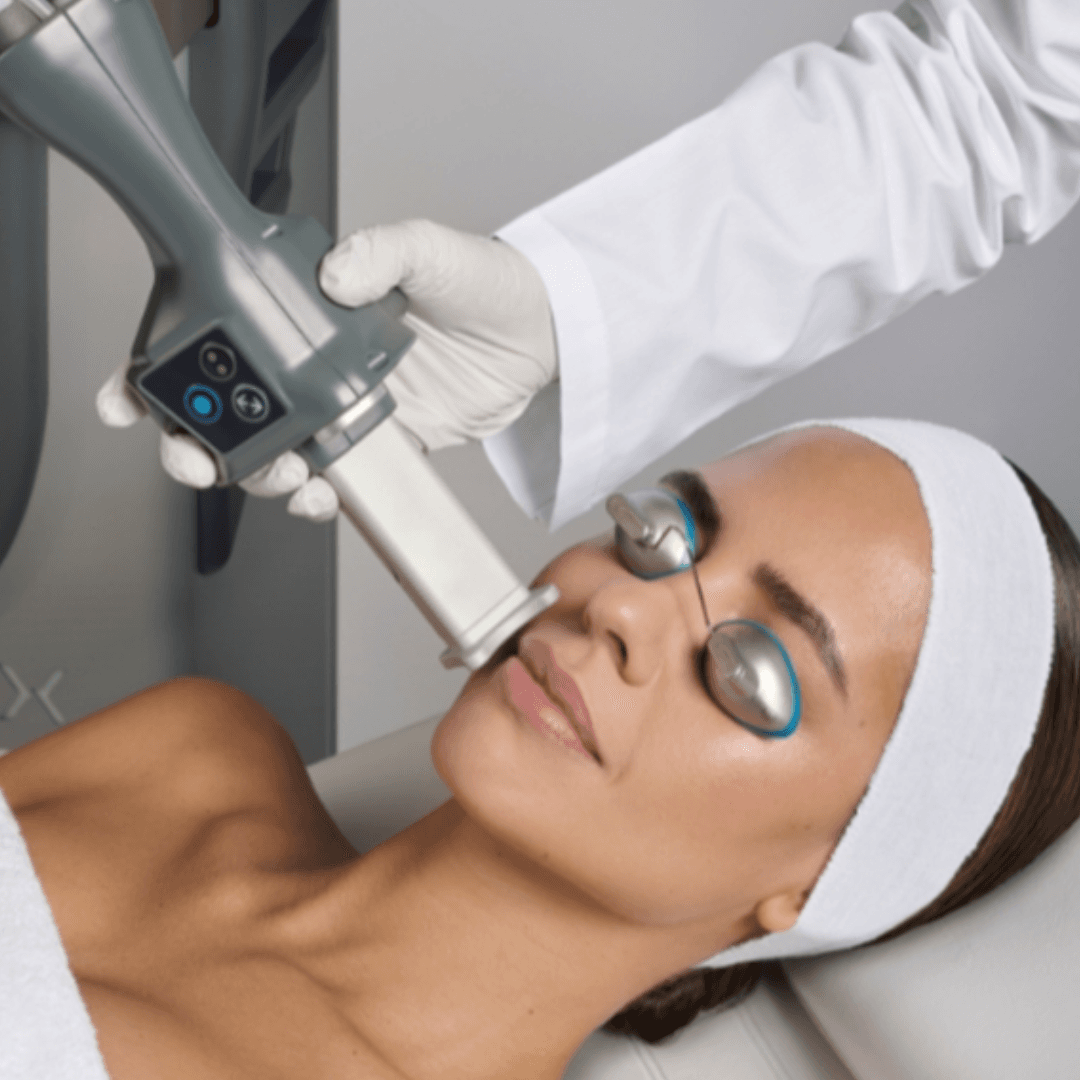
A picosecond is a trillionth of a second, and the number itself isn’t the point — what matters is what that speed does to the pigment sitting in your skin. Older Q-switched lasers rely on heat: they heat the ink or pigment particle until it fragments. Heat is blunt. It can scar, and in melasma specifically, heat is what triggers the pigment to come back darker than it started — something we see constantly in clients who tried other treatments first. PicoWay’s picosecond pulses work differently. They deliver energy so fast that they shatter pigment with a pressure wave instead of heat — closer to a rubber-band snap than a burn. Less heat reaching the surrounding tissue means fewer burns, less scarring risk, and a real safety margin for Fitzpatrick IV through VI skin, which absorbs and reacts to heat-based lasers more aggressively than lighter skin does.
The three wavelengths matter for a separate reason: color. Different inks and pigments absorb different wavelengths. A single-wavelength laser can clear black ink beautifully and do almost nothing to a green or pastel-blue tattoo. Three wavelengths mean the device can actually reach the full range of colors instead of only the easy ones.
The Three Things We Actually Use PicoWay For
In practice, this covers three categories of client, and they rarely overlap. The first is laser tattoo removal — full color range, from solid black work to the blues and greens that give older lasers trouble. The second is permanent makeup removal: microblading, lip blush, eyeliner, and brow tattoos, which behave differently than body ink and get treated as their own category. The third is melasma and pigmentation treatment, which is the one place PicoWay isn’t used alone — it’s one piece of a longer protocol, not a standalone fix. If you’re trying to figure out which of these applies to you, that’s usually obvious from what you’re looking at in the mirror. What’s less obvious is the session count and cost for each, which is where most of the vague marketing language comes from.
Every Session Starts With a Fitzpatrick Assessment — Not a Sales Pitch
We say PicoWay is considered safe across Fitzpatrick I through VI, and we mean that as a starting point for a conversation, not a blanket guarantee that gets skipped past. Every client gets a free consultation and a skin-type assessment before the first session is booked — not after you’ve paid, not as an afterthought. For darker skin tones specifically, this isn’t a formality. It’s the step that determines settings, wavelength choice, and whether a treatment plan needs to move slower than a lighter-skinned client’s would. No upsells means we’re not trying to get you into a chair fast. We’re trying to get your treatment plan right the first time.
Tattoo Removal: Real Session Counts and Real Prices
Tattoo removal with PicoWay typically runs 5 to 12 sessions spaced 6 to 8 weeks apart — a range, not a promise, because ink density, ink age, color, and your own skin tone all move that number. A small, simple black tattoo tends toward the low end. A dense, multicolor piece with blues or greens tends toward the high end, partly because those colors are harder to clear even with three wavelengths doing the work.
Pricing is by size, not by session count guesswork: Extra Small (under 1”x1”) is $199 per session, Small (palm-sized) is $249, Medium (hand-sized) is $299, Large is $399, Half Sleeve is $499, and Full Sleeve is $649. Multiply by however many sessions your tattoo realistically needs, and that’s your actual cost — not the number a discount clinic quotes you before you’ve even shown them the tattoo.
What we won’t do is promise complete removal. Results vary by ink, by how the tattoo was applied, and by your skin tone, and pretending otherwise isn’t honesty — it’s a sales pitch dressed up as a fact. What we can tell you is that the three-wavelength system reaches colors — blues, greens, pastels — that older single-wavelength lasers routinely leave behind as a faded shadow no matter how many sessions you sit through.
Permanent Makeup Removal Runs on the Same Laser, Different Job
Permanent makeup removal — microblading, lip blush, eyeliner, brow tattoos — uses the same PicoWay device and the same wavelength range as body tattoo removal, but it’s priced and treated as its own category, because the pigment sits differently and the areas are smaller and more delicate. This runs $399 per session. It’s a separate conversation from “how much to remove my sleeve,” and if a clinic quotes you one flat number for both, ask which pigment depth they’re actually accounting for.
Melasma: Sessions, Maintenance, and Why the Laser Is Only Half the Protocol
Melasma treatment with PicoWay typically runs 3 to 6 sessions spaced 4 to 6 weeks apart, with maintenance sessions every 6 to 12 months after that — because melasma is a condition we manage, not one we cure. Anyone telling you otherwise is setting you up to feel like the treatment failed when the condition, predictably, comes back without upkeep.
The laser is one piece of a combined protocol, not the whole plan. It’s paired with mineral or tinted SPF 50+, and usually with prescription topicals — hydroquinone, tretinoin, kojic acid, azelaic acid, tranexamic acid — depending on what your skin needs. Skip the sunscreen and the topicals, and the laser sessions are fighting a losing battle against South Florida sun. Pricing here isn’t a flat number the way tattoo removal is — it’s built around your individual treatment plan, because melasma severity and skin tone genuinely change what the protocol looks like session to session.
If a Clinic Offers You IPL for Melasma, Book Somewhere Else
This is the one place we’ll flatly tell you a competitor’s offer is wrong. IPL is heat-based, and heat is exactly what melasma reacts badly to — it can trigger rebound hyperpigmentation, where the pigment comes back darker than before treatment. PicoWay’s picosecond pulses work by pressure, not heat, which is the entire reason it’s usable on melasma in the first place. We see clients regularly who tried an IPL series that seemed to help for a few weeks before the pigment returned worse than when they started. If a clinic offers you IPL for melasma, that’s your answer about how much they understand the condition.
The Device Matters More Than the Marketing
Every clinic will tell you they use the latest laser. That phrase means nothing on its own. What determines your actual results is the specific device and its wavelengths — not the adjective attached to it in an ad. A three-wavelength PicoWay system is a concrete, checkable detail: ask which wavelengths a clinic’s machine actually runs, not whether it’s “advanced.”
Start With the Free Consultation
Tattoo, permanent makeup, or melasma — the starting point is the same free consultation and Fitzpatrick assessment, before any session gets booked or any money changes hands. That’s where we figure out which of these three protocols actually applies to you, and what a realistic session count and cost look like for your specific case, not a generic range pulled from a brochure.
Location
Manhattan Laser Spa — Sunny Isles Beach, FL