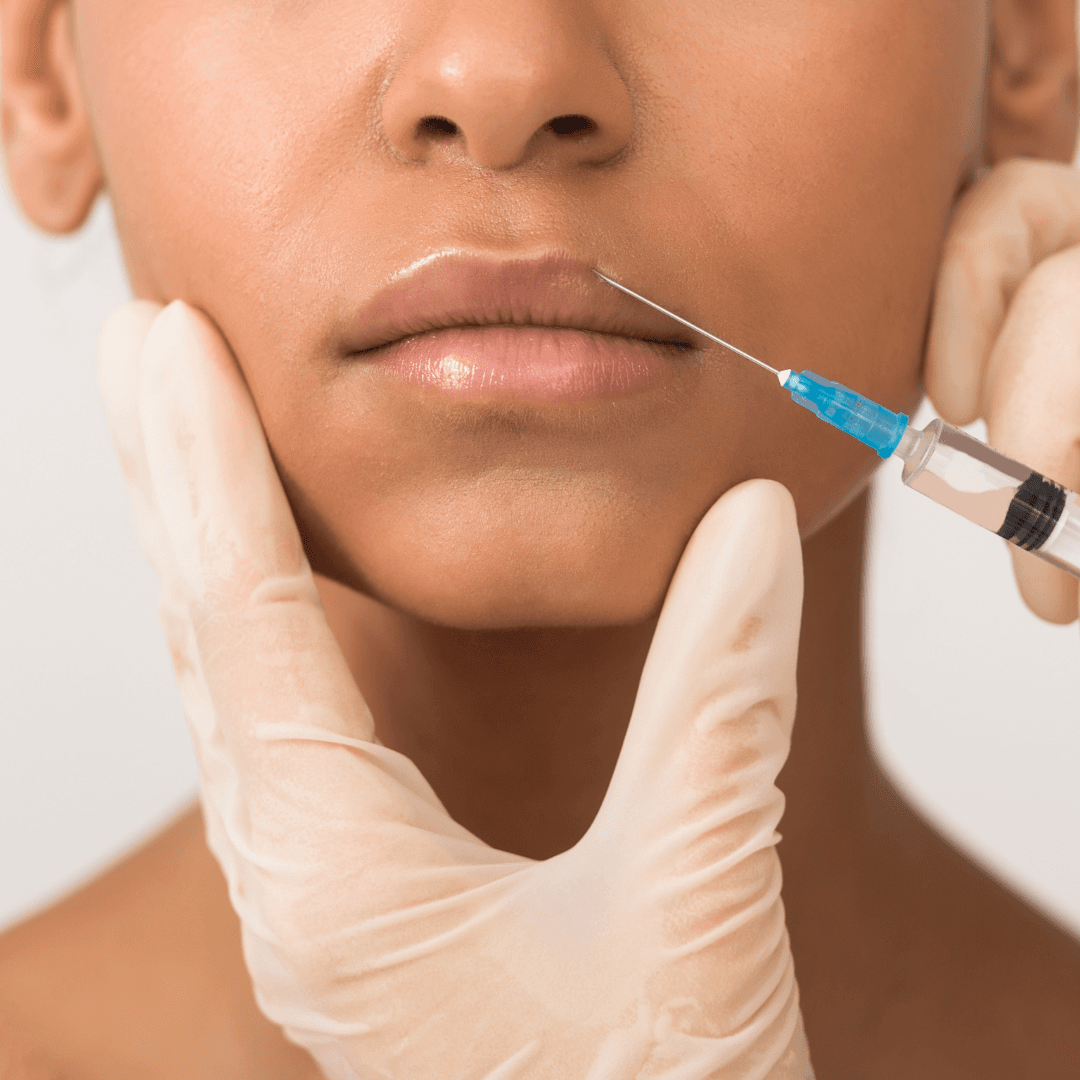
So Your Lips Look Overfilled? Here's What Can (and Can't) Be Fixed
If your lips look overfilled, the first question isn’t “how do I fix this” — it’s “what did I actually get injected.” That answer determines everything else. If you received an HA filler — anything in the Juvederm or Restylane families — there’s a real path to correction using an enzyme called hyaluronidase, which breaks down hyaluronic acid. If you received something else — Sculptra, Radiesse, Bellafill — that path doesn’t exist in the same way, and the honest answer is that your options are far more limited.
Either way, the right next step is an in-person evaluation, not waiting a few weeks to see if it settles down on its own. Some swelling in the first days after injection is normal. Persistent, disproportionate volume weeks later is a different problem, and it’s not one you can diagnose by staring at a mirror under bathroom lighting.
Overfilling Is an Injector Problem, Not a Product Problem
Here’s the part almost nobody selling filler wants to say out loud: overfilled lips are, in the overwhelming majority of cases, not a filler problem. They’re an injector problem. The product didn’t decide to put too much volume in one spot. A person did.
Two injectors using the exact same syringe of the exact same product can produce completely different results. One will place small amounts, assess as they go, and stop before the lip stops looking like a lip. Another will push volume in fast, chase symmetry with more product instead of less, and hand you a mirror before the swelling has even had a chance to show you what you’re actually left with. Same brand. Same concentration. Same needle gauge, even. Completely different outcome. That’s the reality of a technique-dependent procedure — the product is a variable, but it’s not the variable that matters most.
Overfilling specifically — not migration, not lumps, not asymmetry, just too much product — is the single biggest reason filler looks unnatural. It’s rarely the wrong filler. It’s almost always too much of the right filler, placed by someone who didn’t exercise restraint. That’s an uncomfortable thing to hear if you’re the one looking at duck lips in the mirror, but it matters, because it tells you what to actually look for the next time you sit in a chair: not “what filler do you use,” but “how conservative is your injector.”
Why HA Fillers Can Be Corrected — and Others Can’t
This is the split that most articles on this topic blur together, and it’s the single most important thing to understand about your own situation.
HA fillers — the Juvederm family (Ultra Plus XC, Voluma XC, Volbella XC, Vollure XC) and the Restylane family (Kysse, Lyft, Refyne, Defyne, Silk) — are made of hyaluronic acid, a substance your body already produces and already knows how to break down. That’s why hyaluronidase works on them: it’s an enzyme that dissolves hyaluronic acid, whether that HA came from your own tissue or from a syringe. If you were overfilled with one of these products, there is a legitimate, real path to correcting it, and it’s worth an in-person evaluation to find out if you’re a candidate.
Non-HA fillers work on an entirely different mechanism, and that’s exactly why they can’t be reversed the same way. Sculptra is poly-L-lactic acid — it works by stimulating your own collagen production over time, rather than sitting in the tissue as a gel. Radiesse is calcium hydroxylapatite, a mineral-based filler that also triggers collagen production and gradually gets absorbed as part of that process. Bellafill is PMMA — polymethylmethacrylate microspheres suspended in collagen — and it’s specifically designed to be long-lasting, which is the entire point of using it in the first place. None of these are HA-based, so hyaluronidase does nothing to them. If you were overfilled with one of these products, we’re not going to tell you there’s a simple dissolving appointment that undoes it, because there isn’t one. Correction options are real but far more limited, and that’s a conversation that has to happen in person, based on what was actually used and where.
What We Won’t Promise You Here
We’re not going to tell you dissolving is guaranteed to give you a specific look on a specific timeline, because that’s not something anyone can promise from a blog post — it depends on how much product is involved, where it was placed, and how your individual tissue responds. We’re also not going to walk you through self-diagnosis. Overfilled and lumpy are not the same as bruised and swollen, and the only way to tell the difference is to have someone qualified look at it in person.
One more thing worth saying plainly: injections into the lip involve real vascular structures, and technique matters enough that poor injection carries real risk, including vascular occlusion. We’re not raising that to scare you — we’re raising it because it’s the same underlying point as everything above. Restraint and technique aren’t cosmetic preferences. They’re the difference between clean results and a real medical complication. This article is informational. It’s not a substitute for someone examining your lips directly.
Who’s Actually Allowed to Inject or Dissolve Filler in Florida
If you’ve been burned by a discount clinic once, you’re right to ask who was actually allowed to touch your face. In Florida, dermal filler — and that includes hyaluronidase used to dissolve it — has to be injected by a licensed medical professional: an MD, an ARNP, a PA, or an RN working under physician supervision. That’s not a marketing point. It’s the law. If you’re evaluating where to go next, that’s a fair question to ask directly, and a legitimate provider will answer it without hesitation.
Why We Book a 2-Week Check-In After Every Filler Appointment
This is the part of our process that exists specifically to prevent the situation you might be dealing with right now. We book a follow-up check-in two weeks after every filler appointment, because that’s roughly when initial swelling has resolved enough to see what the result actually is — not what it looks like on day one, when everything is still puffy and it’s hard to tell overfilled from just fresh.
That check-in exists to catch asymmetry, lumps, or overfilled results early, while they’re still easy to address, instead of letting a problem sit for months until it’s harder to correct and the person has stopped trusting the process altogether. It’s not an upsell appointment. It’s the point where we look and tell you honestly if something needs to be adjusted.
If You’re Staring at the Mirror Wondering What to Do Next
Don’t wait it out, and don’t try to diagnose it yourself from photos or forums. What matters here is restraint and technique, not the brand printed on the box the syringe came in — which means the only useful next step is having someone evaluate it directly, in person, who can tell you what was actually injected and what your real options are. You can start that conversation on our dermal fillers page, or reach out directly through our contact page to set up an evaluation.
Location
Manhattan Laser Spa — Sunny Isles Beach, FL